There were a variety of ties represented in the 1894 The Clothier & Furnisher but I've included a picture of this rather unique neck-dressing from the Muldaur Company. A company finding themselves in the forefront of various new styles. I can imagine a gentleman big on fashion wearing this tie and other men scratching their heads wondering why. Below the picture is the excerpt from the magazine.
Very remarkable is the display of neck-dressings that has marked the career of the Muldaur Company. Each season finds them to the fore with a multiplicity of new styles such as is the wont of every first-class retailer to see. The revival of the flat scarf for winter wear has been one of the predictions of neckwear connoisseurs this season. The Muldaur Company is one of the first to bring ti out in their line of samples. The illustration herewith given is one of the many pretty shapes to be found in their offerings. The ground is a handsome dark blue silk, and is relieved by polka dots in white. This live concern introduced, this season, a new clasp for fastening the ends of the neck band at the back of the collar. This device is not only more sightly in appearance than any other that has ever been introduced in the trade, but it is also the most practicable. The retailer will do well to watch for this in the display that will be shown them by the Muldaur Company.
Below is the illustration of the tie clasp.
The 19th century was full of innovation, exploration and is one of the most popular eras for writing historical fiction. This blog is dedicated to tiny tidbits of information that will help make your novel seem more real to the time period.
Showing posts with label fashions. Show all posts
Friday, July 14, 2017
Friday, June 30, 2017
Clothing
I was searching for various clothing to be worn while swimming in the 19th century, particularly the 1870's and stumbled on this great little excerpt from John Spicer on Clothes. This recitation is in the book Delsarte Recitation Book ©1893 I'm sharing this hoping you too get a smile on your face when reading it. Not to mention it gives fodder to some possible character's insight of the time period.
IT is very good fun to take off your clothes and go in swimming. Clothes are the things that you wear. They have arms and legs to them, and ever so many buttonholes and buttons, and have pockets. Pockets are the best part of your clothes. We have two kinds of clothes, best ones and old ones. We hang up the best ones and wear the old ones. When you wear your best ones every day you most always get something on them. Once I hitched the picket of a picket-fence into the leg of some best clothes and pitched over head first, and the picket went through, and then I had to take that pair for every-day ones. Gudgeon grease that you get off of wheels will not come off very well. I do not mean it will not come off the wheels very well, but off your clothes. Ink spots stay on, but you can get paint off, if you can get anything to take it off with. Mud brushes off when it gets dry, and your mother doesn't say anything when vou get mud on your every-day ones, but she does on your best ones.
One time when I was a little fellow, when I was going to a party with two little fellows about as big as I was, and we had on our best clothes, we climbed up a tree to see if some birds' eggs had hatched out, and a dry twig on a branch tore a hole on one side of one of my trousers' legs, and I did not want to go back home because that pair was all the best pair of trousers I had. A big fellow—he was not very big, but he was bigger than we little fellows—he told me to go to the party and keep my hand down over the hole, and I did, and somebody that was at the party asked me if my arm was lame, and I said, "No, ma'am;" but when the ice-cream came round, I forgot and took away my hand to take the saucer in it, and that same one looked at it, and laughed some, and she said: "Oh, now I see what the matter was with your arm!" and I laughed a little when she did, and she told me not to think any more about the hole then, but to have a good time and to think about the hole afterward, and I did. She told me a funny story about a hole that was torn. I will tell it: "Once there was a very small boy named Gussie, and he tore his clothes most every day, and his mother had mended them after he had gone to bed and he did not see her do it, and he thought the holes grew up of themselves in the night. And one day when his little cousin Susie tore her dress her mother told her not to tear, and cried, Gussie told her not to cry, for that hole would grow up again in the night, just as holes did in his clothes. And when Susie went to bed she put her dress over a chair to have the holes grow up, and first thing in the morning she went in her night-gown to look, and her mother found her standing there crying, and when her mother asked her what she was crying for, she said, 'Because that hole did not grow together in the night. I thought it would grow up in the night.'"
Once I had some mittens put away in some winter clothes. Mittens are clothes to wear on your hands, and hats are clothes to wear on your head. Once my aunt told me a hat riddle. I will say it: "Two poor little brothers they had but one hat, And both wore the same one, can you guess how was that?
IT is very good fun to take off your clothes and go in swimming. Clothes are the things that you wear. They have arms and legs to them, and ever so many buttonholes and buttons, and have pockets. Pockets are the best part of your clothes. We have two kinds of clothes, best ones and old ones. We hang up the best ones and wear the old ones. When you wear your best ones every day you most always get something on them. Once I hitched the picket of a picket-fence into the leg of some best clothes and pitched over head first, and the picket went through, and then I had to take that pair for every-day ones. Gudgeon grease that you get off of wheels will not come off very well. I do not mean it will not come off the wheels very well, but off your clothes. Ink spots stay on, but you can get paint off, if you can get anything to take it off with. Mud brushes off when it gets dry, and your mother doesn't say anything when vou get mud on your every-day ones, but she does on your best ones.
One time when I was a little fellow, when I was going to a party with two little fellows about as big as I was, and we had on our best clothes, we climbed up a tree to see if some birds' eggs had hatched out, and a dry twig on a branch tore a hole on one side of one of my trousers' legs, and I did not want to go back home because that pair was all the best pair of trousers I had. A big fellow—he was not very big, but he was bigger than we little fellows—he told me to go to the party and keep my hand down over the hole, and I did, and somebody that was at the party asked me if my arm was lame, and I said, "No, ma'am;" but when the ice-cream came round, I forgot and took away my hand to take the saucer in it, and that same one looked at it, and laughed some, and she said: "Oh, now I see what the matter was with your arm!" and I laughed a little when she did, and she told me not to think any more about the hole then, but to have a good time and to think about the hole afterward, and I did. She told me a funny story about a hole that was torn. I will tell it: "Once there was a very small boy named Gussie, and he tore his clothes most every day, and his mother had mended them after he had gone to bed and he did not see her do it, and he thought the holes grew up of themselves in the night. And one day when his little cousin Susie tore her dress her mother told her not to tear, and cried, Gussie told her not to cry, for that hole would grow up again in the night, just as holes did in his clothes. And when Susie went to bed she put her dress over a chair to have the holes grow up, and first thing in the morning she went in her night-gown to look, and her mother found her standing there crying, and when her mother asked her what she was crying for, she said, 'Because that hole did not grow together in the night. I thought it would grow up in the night.'"
Once I had some mittens put away in some winter clothes. Mittens are clothes to wear on your hands, and hats are clothes to wear on your head. Once my aunt told me a hat riddle. I will say it: "Two poor little brothers they had but one hat, And both wore the same one, can you guess how was that?
Monday, March 27, 2017
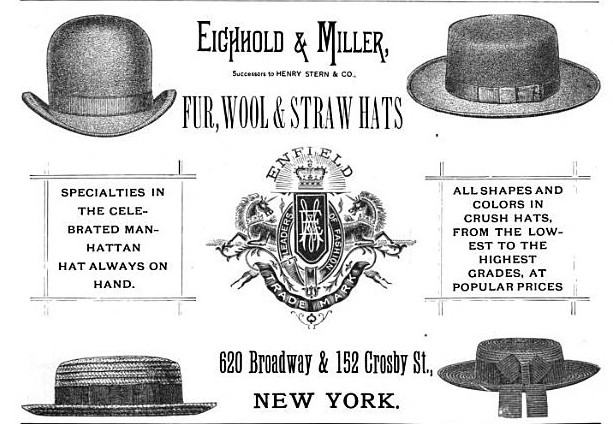
1887 Gentlemen's Hats
Last week there was a blog post with 1870 Gentlemen's Hats. Today I'm posting advertising pictures of 1887 hats from a periodical of the time.
Tuesday, March 21, 2017
Thursday, March 16, 2017
Gentlemen's Hat
There are a wide variety of hats used during the 19th century. We see in our minds eye a top hat that Abraham Lincoln would use. The caps that those serving during the civil war wore and we even imagine the Stetson's hat from Texas fame (of course Stetson's shop was in Philadelphia, PA). Although he did invent the hat while in Colorado. Stetson retailed his hat business and by the end of the 19th century there were 150 whole merchants around the country.
Below is an excerpt from the Library of universal knowledge ©1880 and gives a brief description of how hats were made, specifically in the earlier half of the 19th century.
HAT, a well-known species of head-covering, which has assumed various characters. What we understand by a hat is a fabric of felt, or a silk material used as a substitute for felt. . .
The growing scarcity of beaver-fur led to attempts to substitute a cloth formed of silk plush, drawn over a pasteboard frame, about 1810. These were not very successful; and hats of wool or beaver-felt were common until about 1840. The high cost of beaver at length forced on the improvement of silk hats, and now the beaver is almost entirely superseded; while the fabrication of silk hats has been carried to great perfection not only in England, but in continental countries and the United States. The silk hat consist of a body and rim, usually made of two or three layers of cotton-cloth saturated with varnishes, to give the fabric stiffness, and make it waterproof. These are molded on wooden blocks according to the fashion of the day; and when the desired shape is produced, the whole is carefully furnished over with lac and dammar varnish, and, before dry, the fine silk plush is applied with great nicety, so as to prevent the seams being perceived; it is then trimmed with silk braid on the edge of the brim, and a silken band round the junction of the body with the brim; and the lining of leather and thin silk being put in, it is complete. Lightness, gloss, and durability are the prime qualities of the silk hat; and in these respects the hats of New-York manufacture deserve a high commendation. Very excellent hats are made in London, Paris, and Edinburgh; but they are heavier than those of America.
Below is an excerpt from the Library of universal knowledge ©1880 and gives a brief description of how hats were made, specifically in the earlier half of the 19th century.
HAT, a well-known species of head-covering, which has assumed various characters. What we understand by a hat is a fabric of felt, or a silk material used as a substitute for felt. . .
The growing scarcity of beaver-fur led to attempts to substitute a cloth formed of silk plush, drawn over a pasteboard frame, about 1810. These were not very successful; and hats of wool or beaver-felt were common until about 1840. The high cost of beaver at length forced on the improvement of silk hats, and now the beaver is almost entirely superseded; while the fabrication of silk hats has been carried to great perfection not only in England, but in continental countries and the United States. The silk hat consist of a body and rim, usually made of two or three layers of cotton-cloth saturated with varnishes, to give the fabric stiffness, and make it waterproof. These are molded on wooden blocks according to the fashion of the day; and when the desired shape is produced, the whole is carefully furnished over with lac and dammar varnish, and, before dry, the fine silk plush is applied with great nicety, so as to prevent the seams being perceived; it is then trimmed with silk braid on the edge of the brim, and a silken band round the junction of the body with the brim; and the lining of leather and thin silk being put in, it is complete. Lightness, gloss, and durability are the prime qualities of the silk hat; and in these respects the hats of New-York manufacture deserve a high commendation. Very excellent hats are made in London, Paris, and Edinburgh; but they are heavier than those of America.
Monday, March 13, 2017
Corsets
In the Herald of Health there is an interesting article about the problems of corsets and the harm they can do to the body. The article came out in 1869. The use of a corset during the 19th century changes from place to place and decade to decade. Also, corsets came in a variety of styles and in the amount of restriction it causes the body. They were front laced and a few back laced. The back laced corset is what we've seen through the eyes of Hollywood. The front laced was more practical for the single woman, or the frontier and farm woman. This article shows that by 1869 there was concern about the health issues from wearing a corset.
Below is the excerpt from Herald of Health©1869
And now for the corsets! Why are they worn? To improve the figure, many say. And yet some of the finest forms I have ever seen wore no corsets, but were supposed to do so because of the fine bust. In reference to these, I have been asked what corsets or shoulder braces they wore, the inquirer wishing to secure the same, because the chest was so complete in its contour. Now, the peculiarity with these very young ladies was that they had never worn corsets or been compressed, padded, or braced in any way, but had dressed loosely and taken gymnastics,
which aro better than corsets to improve the bust.
And Encyclopaedia Americana ©1830 has this interesting set of recommendations about wearing corsets.
We may conclude what we have to say on the use of the corset, by imbodying the whole in a few plain, general rules:—1st. Corsets should be made of smooth, soft, elastic materials. 2d. They should be accurately fitted and modified to suit the peculiarities of figure of each wearer. 3d. No other stiffening should be used but that of quilting or padding ; the bones, steel, &c., should be left to the deformed or diseased, for whom they were originally intended. 4th. Corsets should never be drawn so tight as to impede regular, natural breathing, as, under all circumstances, the improvement of figure is insufficient to compensate for the air of awkward restraint caused by such lacing. 5th. They should never be worn, either loosely or tightly, during the hours appropriated to sleep, as, by impeding respiration, and accumulating the heat of the system improperly, they invariably injure. 6th. The corset for young persons should be of the simplest character, and worn in the lightest and easiest manner, allowing their lungs full play, and giving the form its fullest opportumty for expansion.
If one wishes a fine figure, do not encase it in whalebone, so as to limit muscular motion, but rather encourage the free development of every organ within and without by appropriate action; that is, take in the most air possible, so as to make lungs full and free; throw shoulders back so as to make the chest broad and erect; give free play to all tho muscles, so that they will grow strong and support the body well without artificial aid.
Below is the excerpt from Herald of Health©1869
And now for the corsets! Why are they worn? To improve the figure, many say. And yet some of the finest forms I have ever seen wore no corsets, but were supposed to do so because of the fine bust. In reference to these, I have been asked what corsets or shoulder braces they wore, the inquirer wishing to secure the same, because the chest was so complete in its contour. Now, the peculiarity with these very young ladies was that they had never worn corsets or been compressed, padded, or braced in any way, but had dressed loosely and taken gymnastics,
which aro better than corsets to improve the bust.
And Encyclopaedia Americana ©1830 has this interesting set of recommendations about wearing corsets.
We may conclude what we have to say on the use of the corset, by imbodying the whole in a few plain, general rules:—1st. Corsets should be made of smooth, soft, elastic materials. 2d. They should be accurately fitted and modified to suit the peculiarities of figure of each wearer. 3d. No other stiffening should be used but that of quilting or padding ; the bones, steel, &c., should be left to the deformed or diseased, for whom they were originally intended. 4th. Corsets should never be drawn so tight as to impede regular, natural breathing, as, under all circumstances, the improvement of figure is insufficient to compensate for the air of awkward restraint caused by such lacing. 5th. They should never be worn, either loosely or tightly, during the hours appropriated to sleep, as, by impeding respiration, and accumulating the heat of the system improperly, they invariably injure. 6th. The corset for young persons should be of the simplest character, and worn in the lightest and easiest manner, allowing their lungs full play, and giving the form its fullest opportumty for expansion.
If one wishes a fine figure, do not encase it in whalebone, so as to limit muscular motion, but rather encourage the free development of every organ within and without by appropriate action; that is, take in the most air possible, so as to make lungs full and free; throw shoulders back so as to make the chest broad and erect; give free play to all tho muscles, so that they will grow strong and support the body well without artificial aid.
Saturday, November 12, 2016
First Use of an Umbrella
With the excerpt below from Houghtalings it sent me searching for some 19th century information on umbrellas. In 1852 Samuel Fox invented the steel-ribbed umbrella. A huge improvement over the wood and baleen umbrella frames.
From Houghtalings Handbook ©1887
The First Use of an Umbrella
For many centuries the umbrella had been in common use in China and Japan before it was introduced into European countries. About 200 years ago, it was introduced into London by Jonas Hanway, a benevolent and eccentric old gentleman. When he first raised his umbrella, on a rainy day, he found it of unexpected use in keeping off a shower of sticks and stones, with which the street boys pelted him. For a long while it was considered effeminate and ridiculous to use an umbrella.
From Houghtalings Handbook ©1887
The First Use of an Umbrella
For many centuries the umbrella had been in common use in China and Japan before it was introduced into European countries. About 200 years ago, it was introduced into London by Jonas Hanway, a benevolent and eccentric old gentleman. When he first raised his umbrella, on a rainy day, he found it of unexpected use in keeping off a shower of sticks and stones, with which the street boys pelted him. For a long while it was considered effeminate and ridiculous to use an umbrella.
Wednesday, April 6, 2016
1844 Fashions
These prints came from an 1844 American Publication, Peterson's Magazine.
Below is a list of all the Historic Fashion Wednesdays:
1830
1830 Fashions
1832
1832 Fashion Descriptions
Calico Fabric & Printing Note this is the same link as in 1852
1834
1834 Fashions
1835
1835 Fashions
1837
1837 French Fashions
1840
1840 Ladies Fashions
1840 Ladies Fashions Part 2
1843
1843 Fashions
1844
1844 Fashions
1845
1845 Fashions
1850
1850 Ladies Fashions
1851
1851 Fashions
1852
Calico Fabric & Printing Note this is the same link as in 1832
1855
1855 Fashions
1856
1856 Fashions
1857
1857 Fashions
1857 Fashions
1857 Fashions Cont.
1857 Fashions
1858
1858 Bonnets
1859
1859 Handbags & Purses
1859 Fashions
1859 On Proper Dress & Ornaments
1860
1860 Fashions Part 1
1860 Fashions Part 2
1861
1861 Fashions
1862
1862 Fashion Accessories
1862 Fashions
1863
1863 Fashions
1864
1864 Fashions
1864 Bonnets
1865
1865 Fashions
1865 Fashions Part 2
1866
1866 Part 1
1866 Part 2
1866 Women's Fashions
1866 Men's Fashions
1867
1867 Fashions Part 1
1867 Fashions Part 2
1867 Fashions
1867 Fashions
1868
1868 Fashions Part 1
1868 Fashions Part 2
1868 Fashions Part 3
1868 Fashions Part 4
1868 Fashions Part 5
1868 Fashions Part 6
1869
1869 Hair Combs
1869 Fashionable Hair and Headdresses
1869 Everyday Fashion
1870
1870 Winter Fashions for Men
1870 Ladies Fashions
1870 Riding Habit with Trousers for Women
1870 Gentlemen's Hats
1870 Corsets
1871
!871 Fashion Accessories
1871 Fashions
1871 Fashions Part 2
1871 Fashions
1871 Fashions
1872
1872 Fashions
1872 Women's Fashions
1872 Men's Fashions
1872 Fashions
1872 Men's Fashions
1873
1873 Fashion Accessories
1873 Men's Fashions
1874
1874 Fashions Part 1
1874 Fashions Part 2
1874 Men's Fashions
1875
1875 Hats
1875 Ladies Dresses
1875 Undergarments
1876
1876 Fashion Accessories
1876 Fashions
1877
1877 Ladies Hat & Bonnet Fashions
1877 Fashions
1877 Fashions
1878
1878 Ladies & Children's Fashions
1878 Fashions
1879
1879 Fashions
1880
1880 Fashion Accessories
1880 Fashions
1880 Fashions
1880 Fashions
1880 Fashions
1880 Ladies Fashions
1881
1881 Winter Fashions
1881 Fashion Accessories
1881 Fashion Overcoats
1881 Men's Fashions
1881 Hats
1881 Ladies Fashions
1881 Women's Coats
1882
1882 Winter Fashions
1882 Women's Fashions
1882 Men's & Women's Fashions
1882 Fashions
1882 Fashions
1882 Winter Fashions
1882 Coat Fashions
1883
1883 Fashions
1883 Fashions
1883 Fashions
1883 Fashions
1883 Fashions Cont.
1883 Fashions
1883 Fashions
1884
1884 Fashions
1884 French Fashions
1887
1887 Gentlemen's Hats
1889
1889 Fashions
1889 Fashions
1889 Fashions
1890
1890 Ladies Hats
1890 Fashions
1890 Fashions
1891 & 1896
1891 & 1896 Winter Fashions
1893
1893 Fashions
1894
Bustles & Dress Forms
1894 Too Tight Clothing
1896
1896 Spring Gown Womens Fashions
1896 Fashions
1898
1898 Fashions
1898 Fashions Commenting on the turn of the century
1899
1899 Fashions
Throughout the 19th Century
Opera Dresses
Dinner Dresses
Bridal Attire
Fashions of the 19th Century
Below is a list of all the Historic Fashion Wednesdays:
1830
1830 Fashions
1832
1832 Fashion Descriptions
Calico Fabric & Printing Note this is the same link as in 1852
1834
1834 Fashions
1835
1835 Fashions
1837
1837 French Fashions
1840
1840 Ladies Fashions
1840 Ladies Fashions Part 2
1843
1843 Fashions
1844
1844 Fashions
1845
1845 Fashions
1850
1850 Ladies Fashions
1851
1851 Fashions
1852
Calico Fabric & Printing Note this is the same link as in 1832
1855
1855 Fashions
1856
1856 Fashions
1857
1857 Fashions
1857 Fashions
1857 Fashions Cont.
1857 Fashions
1858
1858 Bonnets
1859
1859 Handbags & Purses
1859 Fashions
1859 On Proper Dress & Ornaments
1860
1860 Fashions Part 1
1860 Fashions Part 2
1861
1861 Fashions
1862
1862 Fashion Accessories
1862 Fashions
1863
1863 Fashions
1864
1864 Fashions
1864 Bonnets
1865
1865 Fashions
1865 Fashions Part 2
1866
1866 Part 1
1866 Part 2
1866 Women's Fashions
1866 Men's Fashions
1867
1867 Fashions Part 1
1867 Fashions Part 2
1867 Fashions
1867 Fashions
1868
1868 Fashions Part 1
1868 Fashions Part 2
1868 Fashions Part 3
1868 Fashions Part 4
1868 Fashions Part 5
1868 Fashions Part 6
1869
1869 Hair Combs
1869 Fashionable Hair and Headdresses
1869 Everyday Fashion
1870
1870 Winter Fashions for Men
1870 Ladies Fashions
1870 Riding Habit with Trousers for Women
1870 Gentlemen's Hats
1870 Corsets
1871
!871 Fashion Accessories
1871 Fashions
1871 Fashions Part 2
1871 Fashions
1871 Fashions
1872
1872 Fashions
1872 Women's Fashions
1872 Men's Fashions
1872 Fashions
1872 Men's Fashions
1873
1873 Fashion Accessories
1873 Men's Fashions
1874
1874 Fashions Part 1
1874 Fashions Part 2
1874 Men's Fashions
1875
1875 Hats
1875 Ladies Dresses
1875 Undergarments
1876
1876 Fashion Accessories
1876 Fashions
1877
1877 Ladies Hat & Bonnet Fashions
1877 Fashions
1877 Fashions
1878
1878 Ladies & Children's Fashions
1878 Fashions
1879
1879 Fashions
1880
1880 Fashion Accessories
1880 Fashions
1880 Fashions
1880 Fashions
1880 Fashions
1880 Ladies Fashions
1881
1881 Winter Fashions
1881 Fashion Accessories
1881 Fashion Overcoats
1881 Men's Fashions
1881 Hats
1881 Ladies Fashions
1881 Women's Coats
1882
1882 Winter Fashions
1882 Women's Fashions
1882 Men's & Women's Fashions
1882 Fashions
1882 Fashions
1882 Winter Fashions
1882 Coat Fashions
1883
1883 Fashions
1883 Fashions
1883 Fashions
1883 Fashions
1883 Fashions Cont.
1883 Fashions
1883 Fashions
1884
1884 Fashions
1884 French Fashions
1887
1887 Gentlemen's Hats
1889
1889 Fashions
1889 Fashions
1889 Fashions
1890
1890 Ladies Hats
1890 Fashions
1890 Fashions
1891 & 1896
1891 & 1896 Winter Fashions
1893
1893 Fashions
1894
Bustles & Dress Forms
1894 Too Tight Clothing
1896
1896 Spring Gown Womens Fashions
1896 Fashions
1898
1898 Fashions
1898 Fashions Commenting on the turn of the century
1899
1899 Fashions
Throughout the 19th Century
Opera Dresses
Dinner Dresses
Bridal Attire
Fashions of the 19th Century
Wednesday, March 30, 2016
Wednesday, March 23, 2016
Wednesday, March 16, 2016
19th Century Fashions Review
Hi all,
Below is a list with links of Historical Fashions from the 19th Century. I've updated the list from the one I posted in 2014. If you're looking for a specific year let me know. I like doing this and seeing where the holes are. Believe it or not I have many more years and images. If you're interested in receiving a specific year of images, email me at Lynn@lynncoleman.com.
1830
1830 Fashions
1832
1832 Fashion Descriptions
Calico Fabric & Printing Note this is the same link as in 1852
1834
1834 Fashions
1835
1835 Fashions
1837
1837 French Fashions
1840
1840 Ladies Fashions
1840 Ladies Fashions Part 2
1843
1843 Fashions
1844
1844 Fashions
1845
1845 Fashions
1850
1850 Ladies Fashions
1851
1851 Fashions
1852
Calico Fabric & Printing Note this is the same link as in 1832
1855
1855 Fashions
1856
1856 Fashions
1857
1857 Fashions
1857 Fashions
1857 Fashions Cont.
1857 Fashions
1858
1858 Bonnets
1859
1859 Handbags & Purses
1859 Fashions
1859 On Proper Dress & Ornaments
1860
1860 Fashions Part 1
1860 Fashions Part 2
1861
1861 Fashions
1862
1862 Fashion Accessories
1862 Fashions
1863
1863 Fashions
1864
1864 Fashions
1864 Bonnets
1865
1865 Fashions
1865 Fashions Part 2
1866
1866 Part 1
1866 Part 2
1866 Women's Fashions
1866 Men's Fashions
1867
1867 Fashions Part 1
1867 Fashions Part 2
1867 Fashions
1867 Fashions
1868
1868 Fashions Part 1
1868 Fashions Part 2
1868 Fashions Part 3
1868 Fashions Part 4
1868 Fashions Part 5
1868 Fashions Part 6
1869
1869 Hair Combs
1869 Fashionable Hair and Headdresses
1869 Everyday Fashion
1870
1870 Winter Fashions for Men
1870 Ladies Fashions
1870 Riding Habit with Trousers for Women
1870 Gentlemen's Hats
1870 Corsets
1871
!871 Fashion Accessories
1871 Fashions
1871 Fashions Part 2
1871 Fashions
1871 Fashions
1872
1872 Fashions
1872 Women's Fashions
1872 Men's Fashions
1872 Fashions
1872 Men's Fashions
1873
1873 Fashion Accessories
1873 Men's Fashions
1874
1874 Fashions Part 1
1874 Fashions Part 2
1874 Men's Fashions
1875
1875 Hats
1875 Ladies Dresses
1875 Undergarments
1876
1876 Fashion Accessories
1876 Fashions
1877
1877 Ladies Hat & Bonnet Fashions
1877 Fashions
1877 Fashions
1878
1878 Ladies & Children's Fashions
1878 Fashions
1879
1879 Fashions
1880
1880 Fashion Accessories
1880 Fashions
1880 Fashions
1880 Fashions
1880 Fashions
1880 Ladies Fashions
1881
1881 Winter Fashions
1881 Fashion Accessories
1881 Fashion Overcoats
1881 Men's Fashions
1881 Hats
1881 Ladies Fashions
1881 Women's Coats
1882
1882 Winter Fashions
1882 Women's Fashions
1882 Men's & Women's Fashions
1882 Fashions
1882 Fashions
1882 Winter Fashions
1882 Coat Fashions
1883
1883 Fashions
1883 Fashions
1883 Fashions
1883 Fashions
1883 Fashions Cont.
1883 Fashions
1883 Fashions
1884
1884 Fashions
1884 French Fashions
1887
1887 Gentlemen's Hats
1889
1889 Fashions
1889 Fashions
1889 Fashions
1890
1890 Ladies Hats
1890 Fashions
1890 Fashions
1891 & 1896
1891 & 1896 Winter Fashions
1893
1893 Fashions
1894
Bustles & Dress Forms
1894 Too Tight Clothing
1896
1896 Spring Gown Womens Fashions
1896 Fashions
1898
1898 Fashions
1898 Fashions Commenting on the turn of the century
1899
1899 Fashions
Throughout the 19th Century
Opera Dresses
Dinner Dresses
Bridal Attire
Fashions of the 19th Century
Below is a list with links of Historical Fashions from the 19th Century. I've updated the list from the one I posted in 2014. If you're looking for a specific year let me know. I like doing this and seeing where the holes are. Believe it or not I have many more years and images. If you're interested in receiving a specific year of images, email me at Lynn@lynncoleman.com.
1830
1830 Fashions
1832
1832 Fashion Descriptions
Calico Fabric & Printing Note this is the same link as in 1852
1834
1834 Fashions
1835
1835 Fashions
1837
1837 French Fashions
1840
1840 Ladies Fashions
1840 Ladies Fashions Part 2
1843
1843 Fashions
1844
1844 Fashions
1845
1845 Fashions
1850
1850 Ladies Fashions
1851
1851 Fashions
1852
Calico Fabric & Printing Note this is the same link as in 1832
1855
1855 Fashions
1856
1856 Fashions
1857
1857 Fashions
1857 Fashions
1857 Fashions Cont.
1857 Fashions
1858
1858 Bonnets
1859
1859 Handbags & Purses
1859 Fashions
1859 On Proper Dress & Ornaments
1860
1860 Fashions Part 1
1860 Fashions Part 2
1861
1861 Fashions
1862
1862 Fashion Accessories
1862 Fashions
1863
1863 Fashions
1864
1864 Fashions
1864 Bonnets
1865
1865 Fashions
1865 Fashions Part 2
1866
1866 Part 1
1866 Part 2
1866 Women's Fashions
1866 Men's Fashions
1867
1867 Fashions Part 1
1867 Fashions Part 2
1867 Fashions
1867 Fashions
1868
1868 Fashions Part 1
1868 Fashions Part 2
1868 Fashions Part 3
1868 Fashions Part 4
1868 Fashions Part 5
1868 Fashions Part 6
1869
1869 Hair Combs
1869 Fashionable Hair and Headdresses
1869 Everyday Fashion
1870
1870 Winter Fashions for Men
1870 Ladies Fashions
1870 Riding Habit with Trousers for Women
1870 Gentlemen's Hats
1870 Corsets
1871
!871 Fashion Accessories
1871 Fashions
1871 Fashions Part 2
1871 Fashions
1871 Fashions
1872
1872 Fashions
1872 Women's Fashions
1872 Men's Fashions
1872 Fashions
1872 Men's Fashions
1873
1873 Fashion Accessories
1873 Men's Fashions
1874
1874 Fashions Part 1
1874 Fashions Part 2
1874 Men's Fashions
1875
1875 Hats
1875 Ladies Dresses
1875 Undergarments
1876
1876 Fashion Accessories
1876 Fashions
1877
1877 Ladies Hat & Bonnet Fashions
1877 Fashions
1877 Fashions
1878
1878 Ladies & Children's Fashions
1878 Fashions
1879
1879 Fashions
1880
1880 Fashion Accessories
1880 Fashions
1880 Fashions
1880 Fashions
1880 Fashions
1880 Ladies Fashions
1881
1881 Winter Fashions
1881 Fashion Accessories
1881 Fashion Overcoats
1881 Men's Fashions
1881 Hats
1881 Ladies Fashions
1881 Women's Coats
1882
1882 Winter Fashions
1882 Women's Fashions
1882 Men's & Women's Fashions
1882 Fashions
1882 Fashions
1882 Winter Fashions
1882 Coat Fashions
1883
1883 Fashions
1883 Fashions
1883 Fashions
1883 Fashions
1883 Fashions Cont.
1883 Fashions
1883 Fashions
1884
1884 Fashions
1884 French Fashions
1887
1887 Gentlemen's Hats
1889
1889 Fashions
1889 Fashions
1889 Fashions
1890
1890 Ladies Hats
1890 Fashions
1890 Fashions
1891 & 1896
1891 & 1896 Winter Fashions
1893
1893 Fashions
1894
Bustles & Dress Forms
1894 Too Tight Clothing
1896
1896 Spring Gown Womens Fashions
1896 Fashions
1898
1898 Fashions
1898 Fashions Commenting on the turn of the century
1899
1899 Fashions
Throughout the 19th Century
Opera Dresses
Dinner Dresses
Bridal Attire
Fashions of the 19th Century
Wednesday, February 10, 2016
Subscribe to:
Posts (Atom)