
Showing posts with label 1895. Show all posts
Showing posts with label 1895. Show all posts
Tuesday, September 12, 2017
1895 Hair Dye
Here is an advertisement from an 1895 newspaper offering to wash that gray away. Okay, so it isn't actually that but I remember those old commercials. Hair Dye has been around for centuries.


Wednesday, September 6, 2017
Crescent Bicycles
Last week I posted 5 ads for different types of bicycles. Below is a copy of an advertisement for Crescent Bicycles the prices reflect the costs of 1895. Note that I also saw a Monarch Bicycle ad reflecting higher costs of $85 to $100.


Wednesday, August 16, 2017
Different Buggy Topper
Below is a advertisement I found in the Hub magazine ©1895. I found it very different from other hoods for buggies. It basically looks like an umbrella. This is not the normal hood for a buggy, in all my research of Carriages & Wagons for the 19th century, I believe this is the first time I've run across such a design. I don't know how much they sold for, nor do I know how popular they became, if at all. But they would make quite the conversation piece if one strolled into town, I would have a lot of fun with this in a novel setting.


Wednesday, June 28, 2017
American Buggy
Today's post includes a quote from 1795-1895 One Hundred Years of Commerence ©1895 as well as 4 images from the 1859-1860 New York Carriage Makers Magazine. There are many different styles of buggies so I've selected only four to give you some variety.
To sum up the American Buggy in terms of the 19th century:
"The buggy is purely American in its origin, and is without doubt the greatest achievement of American carriage-makers. The body may be of any form, but the running part is always of the same, or nearly the same, type. Its common-sense construction is wholly unlike the work of any other country. It is simpler, lighter, stronger, and cheaper than any other style of vehicle, and is so admirable in all respects that it is not likely to go out of use for at least another century."
Below are a two sketches of the American Buggy.

 This is probably the most common shape of the American Buggy, as I've scene so far from my research.
 This design is larger than other's I've found as well. There is a smaller buggy for one person used for hunting as well.

To sum up the American Buggy in terms of the 19th century:
"The buggy is purely American in its origin, and is without doubt the greatest achievement of American carriage-makers. The body may be of any form, but the running part is always of the same, or nearly the same, type. Its common-sense construction is wholly unlike the work of any other country. It is simpler, lighter, stronger, and cheaper than any other style of vehicle, and is so admirable in all respects that it is not likely to go out of use for at least another century."
Below are a two sketches of the American Buggy.


Thursday, June 8, 2017
Spectacles or Eyeglasses
Eye glasses have been around in various forms since before Christ(BC). In the 19th century we saw some development in spectacles and by the end of the century they were becoming more common place and designer fashionable. I stumbled on a book "Spectacles and Eyeglasses" by Richard Jones Phillips ©1895 that goes into the process of making eyeglasses. Below is an excerpt about the type of materials used to make these spectacles, I thought it fitting when writing about our characters putting on spectacles we know some of these little tidbits. Also there are some great photographs and illustrations in the book.
The Material of Spectacle Frames is usually gold, silver, or steel. Various alloys have also been employed, and sold as aluminium or nickel. So far as I have examined them, they consist principally of tin, and contain little or none of the metals whose names they borrow. Real nickel is too flexible a metal to be used with advantage for spectacle frames, while, so far, no means have been found of soldering aluminium firmly. Were this difficulty overcome, the lightness, stiffness, and freedom from rust of aluminium would make it an excellent material for cheap frames. Silver, like nickel, is too flexible, except for workmen's protective goggles, or some such purpose, where very heavy frames are allowable. Gold, of from 10 to 14 karat, is, by far, the best material for frames. Finer than this it is too flexible, while if less pure it may blacken the skin. In the end, such frames are cheaper than steel, as, owing to the liability of the latter metal to rust when in contact with the moist skin, the gold will outlast it many times over. In eyeglasses, however, the parts are heavier, and the metal is not in contact with the skin; so that there is not the same liability to rust. The gold frames furnished by opticians in this country usually have a stamp mark on the inner side of the right temple, near the hinge, which denotes the fineness of the gold: thus 8 karat is marked -(-; 10 karat, B. 12 karat, *; while 14 karat, or finer, is marked 14k, etc.
The Material of Spectacle Frames is usually gold, silver, or steel. Various alloys have also been employed, and sold as aluminium or nickel. So far as I have examined them, they consist principally of tin, and contain little or none of the metals whose names they borrow. Real nickel is too flexible a metal to be used with advantage for spectacle frames, while, so far, no means have been found of soldering aluminium firmly. Were this difficulty overcome, the lightness, stiffness, and freedom from rust of aluminium would make it an excellent material for cheap frames. Silver, like nickel, is too flexible, except for workmen's protective goggles, or some such purpose, where very heavy frames are allowable. Gold, of from 10 to 14 karat, is, by far, the best material for frames. Finer than this it is too flexible, while if less pure it may blacken the skin. In the end, such frames are cheaper than steel, as, owing to the liability of the latter metal to rust when in contact with the moist skin, the gold will outlast it many times over. In eyeglasses, however, the parts are heavier, and the metal is not in contact with the skin; so that there is not the same liability to rust. The gold frames furnished by opticians in this country usually have a stamp mark on the inner side of the right temple, near the hinge, which denotes the fineness of the gold: thus 8 karat is marked -(-; 10 karat, B. 12 karat, *; while 14 karat, or finer, is marked 14k, etc.
Monday, May 29, 2017
Memorial Day
Here's a link to a website that gives some history behind Memorial Day and yes we began to celebrate it during the 19th century. Memorial Day History The site also has a great list of referring sites as well.
In 1870 The Army produced a record of ceremonies over the graves of the fallen soldiers. The National Memorial Day
In 1897 Michigan produced a small book for a suggested program for their schools in observance of Memorial day. Memorial Day
Please note that the practice started in the South before it became a National holiday and it was commonly known as Decoration Day.
In 1870 The Army produced a record of ceremonies over the graves of the fallen soldiers. The National Memorial Day
In 1897 Michigan produced a small book for a suggested program for their schools in observance of Memorial day. Memorial Day
Please note that the practice started in the South before it became a National holiday and it was commonly known as Decoration Day.
Wednesday, April 12, 2017
Planting Corn
For most of our characters in the 19th century they enjoyed and needed to plant their own food. Corn was a staple in most homes and farms. Below are some brief tidbits about when to plant corn.
In a 1828 source it is recommended to plant corn on Long Island, NY from the 10th-20th of May.
In 1845 an individual began planting corn in April. Unfortunately it doesn't say where.
An 1854 also says from 10-25th of May.
In a 1895 source it recommends to plant corn when the white oak leaves are as big as a squirrel's foot or a mouse's ear. For New England and Middle states.
Of the various sources I read, most prepared the field by laying down the manurer a month before.
In a 1828 source it is recommended to plant corn on Long Island, NY from the 10th-20th of May.
In 1845 an individual began planting corn in April. Unfortunately it doesn't say where.
An 1854 also says from 10-25th of May.
In a 1895 source it recommends to plant corn when the white oak leaves are as big as a squirrel's foot or a mouse's ear. For New England and Middle states.
Of the various sources I read, most prepared the field by laying down the manurer a month before.
Thursday, January 12, 2017
The Bronx 1874
The Bronx is as familiar to us today as New York City. However, it wasn't until 1874 that the Bronx was annexed into it's own county. Below you'll find a brief history of the Bronx and the last paragraph points out the dates significant to the 19th century. The excerpt comes from Historical guide to the city of New York ©1909 pg.179
HISTORICAL SKETCH OF THE BRONX.
The Borough of the Bronx derives its name from the first white settler, Jonas Bronck, who settled near theBronx Kills in 1639 and called his home Emmaus. An adjacent river became known as Bronck's (shortened later to Bronx) River and in recent times the same name was applied to the whole borough. Many Indians of the Moh1can nation, Suwanoy tribe and Weckquaeskeeks local tribe, branches of the Algonquin race, made this borough their home, dwelling on the shores of the Hudson, the Sound and the Bronx River. They left various Indian names behind them, such as Acquehaunck, Mannepies, Quinnahoung Kekeshick, Laap-hawach-king, Mosholu. Many of the old titledeeds date back to early purchases from Indian sachems.
The earliest Dutch settlement was probably in 1654 at Westchester. The English soon followed, some of the first titles being granted by Governor Nicolls.
Many Revolutionary scenes were enacted in this borough and a full quota of its citizens went forth to serve and die in defence of their rights. The dreaded Neutral Ground extended from the Harlem to the northern limits of the present borough. Pelham saw the " Battle of Pelham Neck," while Westchester may well boast of its Battle of Westchester Creek (see Section V). Other sections could tell of individual engagements with the King's forces.
The early and middle parts of the Nineteenth Century brought great changes. Extensive farm lands were made to bring forth the fruits of the earth; then came the successful business men, who located here their country , estates and elegant mansions, many examples of which are yet to be found, in spite of the advance of the city.
The year 1874 brought annexation to the city of New York of 13,000 acres of the western part of the Bronx,followed in 1895 by the remaining 20,000 acres. And now these 33,000 acres of hill and plain are fast merging 1nto that wonderful city that is proud to style itself " America's Metropolis."
HISTORICAL SKETCH OF THE BRONX.
The Borough of the Bronx derives its name from the first white settler, Jonas Bronck, who settled near theBronx Kills in 1639 and called his home Emmaus. An adjacent river became known as Bronck's (shortened later to Bronx) River and in recent times the same name was applied to the whole borough. Many Indians of the Moh1can nation, Suwanoy tribe and Weckquaeskeeks local tribe, branches of the Algonquin race, made this borough their home, dwelling on the shores of the Hudson, the Sound and the Bronx River. They left various Indian names behind them, such as Acquehaunck, Mannepies, Quinnahoung Kekeshick, Laap-hawach-king, Mosholu. Many of the old titledeeds date back to early purchases from Indian sachems.
The earliest Dutch settlement was probably in 1654 at Westchester. The English soon followed, some of the first titles being granted by Governor Nicolls.
Many Revolutionary scenes were enacted in this borough and a full quota of its citizens went forth to serve and die in defence of their rights. The dreaded Neutral Ground extended from the Harlem to the northern limits of the present borough. Pelham saw the " Battle of Pelham Neck," while Westchester may well boast of its Battle of Westchester Creek (see Section V). Other sections could tell of individual engagements with the King's forces.
The early and middle parts of the Nineteenth Century brought great changes. Extensive farm lands were made to bring forth the fruits of the earth; then came the successful business men, who located here their country , estates and elegant mansions, many examples of which are yet to be found, in spite of the advance of the city.
The year 1874 brought annexation to the city of New York of 13,000 acres of the western part of the Bronx,followed in 1895 by the remaining 20,000 acres. And now these 33,000 acres of hill and plain are fast merging 1nto that wonderful city that is proud to style itself " America's Metropolis."
Thursday, December 1, 2016
Away In The Manger
This Christmas hymn was first published in 1885, the author is unknown but the music was composed by William J. Kirkpatrick in 1895
Away in a manger,
No crib for His bed,
The little Lord Jesus,
Laid down His sweet head.
The stars in the bright sky,
Looked down where He lay,
The little Lord Jesus,
Asleep on the hay.
The cattle are lowing,
The poor Baby wakes,
But little Lord Jesus,
No crying He makes.
I love Thee, Lord Jesus,
Look down from the sky,
And stay by my side,
'Til morning is nigh.
Be near me, Lord Jesus,
I ask Thee to stay,
Close by me forever,
And love me I pray.
Bless all the dear children,
In Thy tender care,
And take us to heaven,
To live with Thee there.
Away in a manger,
No crib for His bed,
The little Lord Jesus,
Laid down His sweet head.
The stars in the bright sky,
Looked down where He lay,
The little Lord Jesus,
Asleep on the hay.
The cattle are lowing,
The poor Baby wakes,
But little Lord Jesus,
No crying He makes.
I love Thee, Lord Jesus,
Look down from the sky,
And stay by my side,
'Til morning is nigh.
Be near me, Lord Jesus,
I ask Thee to stay,
Close by me forever,
And love me I pray.
Bless all the dear children,
In Thy tender care,
And take us to heaven,
To live with Thee there.
Wednesday, November 2, 2016
Taxes
There was no annual Federal Income Tax in the 19th century but the folks of that century still had to pay taxes. Here's a brief sketch of some of the taxes.
1812 because of the cost of the War of 1812 the nation's first income taxes were paid. Gold, silverware, jewelry and watches.
1817 did away with taxes and started to rely on tariffs on imported goods.
1862 Congress enacted the first income tax law
1862 Commissioner of Internal Revenue established.
1868 Congress enacted a tobacco and Spirits tax
1872 Eliminated the Income Tax law
1894-1895 Income tax returned
1895 Supreme Court decided the tax unconstitutional
1812 because of the cost of the War of 1812 the nation's first income taxes were paid. Gold, silverware, jewelry and watches.
1817 did away with taxes and started to rely on tariffs on imported goods.
1862 Congress enacted the first income tax law
1862 Commissioner of Internal Revenue established.
1868 Congress enacted a tobacco and Spirits tax
1872 Eliminated the Income Tax law
1894-1895 Income tax returned
1895 Supreme Court decided the tax unconstitutional
Saturday, October 29, 2016
Block Planes
Hi all,
My dad has an incredible antique tool collection. I was hoping to photograph these tools to show on my blog but that wasn't possible without taking apart his display. I managed to pick up a couple of his planes and was surprised to find the bottoms weren't all flat.
Okay, some of you probably knew this but I didn't. My dad went on to explain that the various designs in the planes were for different cuttings, in much the same way we use a router today. This made me think back on the numerous door casings I'd seen over the years in older and Victorian homes and gave me a greater appreciation for all the hard work that went into making them. Think of the crown molding, the chair rails, etc. All of those curves were done by hand.
There's an article in American Woodworker Jun 1999 about Hand-Planned Moldings if you'd like to read further. There are a couple of photographs in which you'll see Wooden Block Planes.
I hope to have some photographs in the future but that will be quite a few months away. In the meantime you can search for Wooden Block Planes and find some images. Few show the bottom of the plane, the actual working edge, but you'll get the idea. And the articles gives you a greater appreciation for how the intrigue molding was made.
Wooden Block Planes have been around for centuries, in 1860 a cast iron bodied planes were developed by Leonard Bailey who sold his patents to Stanley Rule & Level in 1869. This design is still produced today.
If you'd like more information about Block Planes there is a great book out there "The Handplane Book" by Garrett Hack, John S. Sheldon, several pages of which are available for preview at Google books.
Here are a couple of pages from the 1894-1985 Fall Montgomery Ward Catalogue in full scan so you can read the details.
Pages 1 & 2
Pages 3
My dad has an incredible antique tool collection. I was hoping to photograph these tools to show on my blog but that wasn't possible without taking apart his display. I managed to pick up a couple of his planes and was surprised to find the bottoms weren't all flat.
Okay, some of you probably knew this but I didn't. My dad went on to explain that the various designs in the planes were for different cuttings, in much the same way we use a router today. This made me think back on the numerous door casings I'd seen over the years in older and Victorian homes and gave me a greater appreciation for all the hard work that went into making them. Think of the crown molding, the chair rails, etc. All of those curves were done by hand.
There's an article in American Woodworker Jun 1999 about Hand-Planned Moldings if you'd like to read further. There are a couple of photographs in which you'll see Wooden Block Planes.
I hope to have some photographs in the future but that will be quite a few months away. In the meantime you can search for Wooden Block Planes and find some images. Few show the bottom of the plane, the actual working edge, but you'll get the idea. And the articles gives you a greater appreciation for how the intrigue molding was made.
Wooden Block Planes have been around for centuries, in 1860 a cast iron bodied planes were developed by Leonard Bailey who sold his patents to Stanley Rule & Level in 1869. This design is still produced today.
If you'd like more information about Block Planes there is a great book out there "The Handplane Book" by Garrett Hack, John S. Sheldon, several pages of which are available for preview at Google books.
Here are a couple of pages from the 1894-1985 Fall Montgomery Ward Catalogue in full scan so you can read the details.
Pages 1 & 2
Pages 3
Thursday, April 21, 2016
Various Types of Hay
Naturally, where your story is set has a bearing on which kind of hay you would us but here's a short list of some of the types.
Clover hay has a higher feeding value ton for ton than meadow hay or corn-fodder. It is so much superior that I must be pardoned for illustrating it from Stewart's tables.
Source: The Breeder's Gazette ©1895
(I didn't include the table for this tidbit.)
Timothy hay is almost universally considered as the best of the long foods for horses. yet many hays from mixed grasses are used. and is some sections alfalfa hay. In recent years in some sections cut and shredded corn fodder has become very popular. and for many years corn blades have been preferred. in the South. by the keepers of race horses.
I prefer Orchard grass hay to timothy hay as it has more blades, timothy dies out in the course of a few years, while an Orchard grass sod will continue to get better each year for many years. One acre of Orchard grass will afford as much pasture as two of clover and timothy. I believe timothy to be an impoverisher of the land, while Orchard grass forms such an immense sod that for plowing under it is equal to a clover one.
Source Henderson's Handbook ©18 quote came from a man in VA.
Alfalfa hay is preferable to either clover or timothy for farm animals, and especially for swine, one acre being worth three of clover for hogs. It is also good for horses, and for oatile it is worth three times as much as red clover.
Source: Report of Kansas State Board of Agriculture ©1893
Oat Hay The results of the experiments indicate that the nutrients of oat hay are in the most digestible form when the heads are in milk. If cut in bloom there is a less yield of poorer composition and digestibility than when cut in milk. If the cutting is delayed till the oats are in the dough stage, the slightly larger yield is more than offset by the poor quality and lessened digestibility of the hay.
Source: Annual Report of Maine ©1898
Below is a list without descriptions of various hays:
Meadow Fescue Hay
Mountain Rye Grass Hay
Canary Reed Grass Hay
Salt Grass Hay
Lupine
White Lupine
Wild Oats Hay
Wheat Hay
Red Top Hay
Clover hay has a higher feeding value ton for ton than meadow hay or corn-fodder. It is so much superior that I must be pardoned for illustrating it from Stewart's tables.
Source: The Breeder's Gazette ©1895
(I didn't include the table for this tidbit.)
Timothy hay is almost universally considered as the best of the long foods for horses. yet many hays from mixed grasses are used. and is some sections alfalfa hay. In recent years in some sections cut and shredded corn fodder has become very popular. and for many years corn blades have been preferred. in the South. by the keepers of race horses.
I prefer Orchard grass hay to timothy hay as it has more blades, timothy dies out in the course of a few years, while an Orchard grass sod will continue to get better each year for many years. One acre of Orchard grass will afford as much pasture as two of clover and timothy. I believe timothy to be an impoverisher of the land, while Orchard grass forms such an immense sod that for plowing under it is equal to a clover one.
Source Henderson's Handbook ©18 quote came from a man in VA.
Alfalfa hay is preferable to either clover or timothy for farm animals, and especially for swine, one acre being worth three of clover for hogs. It is also good for horses, and for oatile it is worth three times as much as red clover.
Source: Report of Kansas State Board of Agriculture ©1893
Oat Hay The results of the experiments indicate that the nutrients of oat hay are in the most digestible form when the heads are in milk. If cut in bloom there is a less yield of poorer composition and digestibility than when cut in milk. If the cutting is delayed till the oats are in the dough stage, the slightly larger yield is more than offset by the poor quality and lessened digestibility of the hay.
Source: Annual Report of Maine ©1898
Below is a list without descriptions of various hays:
Meadow Fescue Hay
Mountain Rye Grass Hay
Canary Reed Grass Hay
Salt Grass Hay
Lupine
White Lupine
Wild Oats Hay
Wheat Hay
Red Top Hay
Thursday, April 14, 2016
Blueberries
Rather than give you recipes for blueberries I thought these little tidbits from various states might spark some thoughts for some of your stories. Enjoy!
Blueberries and cranberries. The blueberries and cranberries, of which there are about eleven varieties in the state, include some well-known forms. Here are to be classified the bog huckleberry, the dwarf bilberry, the thin-leafed bilberry, the tall bilberry, the tall blueberry, the Canada blueberry, the low blueberry, the mountain cranberry or cowberry, the deerberry, the small and the large cranberry. Most of these are found only in the northern part the state, especially along the international boundary and the north side of Lake Superior, extending, as so many northern plants do, down the valley of the St. Croix, through which in early days Lake Superior drained into the Mississippi river.
Blueberries. The different kinds of blueberries or bilberries are to be discriminated by their foliage and by the flavor of the berries. The one most common is the dwarf or low blueberry, gathered in large quantities for the market. Its fruits are blue with a whitish bloom and are of very pleasant flavor, enjoyed alike by the Indians and the whites. The plant is a low shrub, with pale green leaves, not evergreen. Its flowers are vase-shaped, small, and white or pink.
The deerberry, which resembles the blueberry in some respects, is considerably larger—three or four feet in height. The berries, shaped like the blueberries, are greenish or yellow and not edible. This variety is also called the squaw huckleberry.
The Canada blueberry, found growing in much moister soil than the ordinary form, has smaller berries, of a blue color, with a bloom. It may be distinguished by the entire margins of the leaves, quite different from the notched margins of the low blueberry. The bog blueberry has pink flowers and small ovate leaves. The cowberry may be recognized by the sour red berries and the evergreen leaves. The flowers and fruits are in structure altogether similar to those of the blueberries.
Source: Minnesota Plant Life ©1899
New Hampshire
The Benton Range.
In the W. part of the town of Benton, and running nearly N. and S., is the chain of peaks which includes Owl's Head, Blueberry Mt., Hogsback Mt., Sugar Loaf, and Black Mt. Though not remarkable for altitude or mass, these summits are otherwise picturesque and interesting, and may be visited without great labor. The same town also contains the famous Moosilauke, another Black Mt. (now called Mt. Clough), and a part of the Blue Ridge. There are no accommodations for tourists here, and people who wish to explore the Benton Range must start out from Warren, Haverhill, or Newbury. The hotels at the latter points are better than that at Warren, and the difference in distance is small. Benton has but 375 inhabitants, and is famous for its quartz crystals and other minerals and ores.
Owl's Head is a spur of Blueberry Mt. to the S. W., and is faced by a fine preoipice, several hundred ft. high, of purple and other dark-hued rocks. Thousands of bushels of blueberries are gathered yearly on this ridge. The ascent is made from the highway, near Warren Summit, and is steep, but short. A vague path conducts through the lower thickets, and along the face of the ridge which looks off on the cliffs. Large crystals of epidote are found about the cliff.
...
Blueberry Mountain is the name given to the fine peak N. of and above Owl's Head. It may be easily ascended from Owl's Head in less thaii an hour, although a quicker route for tourists who do not care to visit the latter summit is to go up the N.-Benton road to a point about 7 M. from Warren, and then strike up the E. flank. For about 1 M. from the summit the mountain is free from trees and is covered with alternate bands of carpet-like moss and granite ledges moderately inclined. The work of ascent and exploration is thus rendered easy and pleasant. There is but a slight depression between Owl's Head and Blueberry Mt., the former being a bold spur of the latter rather than a detached mountain. On the highest point of Blueberry Mt. is a signal-beacon of the U. S. Coast Survey (2,800 ft. above the sea).
Source: The White Mountains ©1876
Dwarf Blueberry, Low Blueberry. Six inches to two feet high, usually forming straggling masses in dry woods and old fields. Common, and well known throughout the southeastern parts of the state. Fruit abundant, blue or black. The earliest blueberry of the markets.
Canada Blueberry. A straggling shrub, stouter than the preceding, which it resembles. Leaves and branches downy. Berries often oval, blue, somewhat acid. Probably never seen in the markets. Northern part of state.
Half-high Blueberry. Sugar Blueberry. Two or three feet high, with upright, slender, yellowish-green branches. Fruit harder, and keeps longer than that of any other species; usually very round, bright blue, and spicy. It has the most limited range of any of our blueberries. It is common on pine barrens, and sparingly found very near the Connecticut river as far north as the rapids at White River.
High Blueberry. A shrub ten to fifteen feet high, with stems sometimes two inches in diameter. It grows in moist lands and swamps. The wood is hard and very closeSgrained, useful for the handles of small tools. No attempts have been made to cultivate it, although it doubtless could be cultivated to advantage.
Male Blueberry, Stagger Bush. Shrub three or four feet high, with yellowish bark. In the same situations and much resembling the high blueberry, but the fruit a dry, globular pod instead of a berry. Sometimes poisonous to cattle. Southern parts of the state.
Source: The Forests of Vermont ©1886
The culture and improvement of the blueberry is also receiving attention. There are large areas in the State which at present are practically worthless but which with a little attention and the planting of a few hundreds or thousands of blueberry bushes might, in our opinion, be made to yield profitable returns. Again, if the little dry, unsatisfactory June berry is worthy of culture in the garden, and it is cultivated to quite an extent, there certainly seems to be a field for work in developing improved varieties of the much more promising blueberry.
Source: Agriculture of Maine ©1895
Blueberries and cranberries. The blueberries and cranberries, of which there are about eleven varieties in the state, include some well-known forms. Here are to be classified the bog huckleberry, the dwarf bilberry, the thin-leafed bilberry, the tall bilberry, the tall blueberry, the Canada blueberry, the low blueberry, the mountain cranberry or cowberry, the deerberry, the small and the large cranberry. Most of these are found only in the northern part the state, especially along the international boundary and the north side of Lake Superior, extending, as so many northern plants do, down the valley of the St. Croix, through which in early days Lake Superior drained into the Mississippi river.
Blueberries. The different kinds of blueberries or bilberries are to be discriminated by their foliage and by the flavor of the berries. The one most common is the dwarf or low blueberry, gathered in large quantities for the market. Its fruits are blue with a whitish bloom and are of very pleasant flavor, enjoyed alike by the Indians and the whites. The plant is a low shrub, with pale green leaves, not evergreen. Its flowers are vase-shaped, small, and white or pink.
The deerberry, which resembles the blueberry in some respects, is considerably larger—three or four feet in height. The berries, shaped like the blueberries, are greenish or yellow and not edible. This variety is also called the squaw huckleberry.
The Canada blueberry, found growing in much moister soil than the ordinary form, has smaller berries, of a blue color, with a bloom. It may be distinguished by the entire margins of the leaves, quite different from the notched margins of the low blueberry. The bog blueberry has pink flowers and small ovate leaves. The cowberry may be recognized by the sour red berries and the evergreen leaves. The flowers and fruits are in structure altogether similar to those of the blueberries.
Source: Minnesota Plant Life ©1899
New Hampshire
The Benton Range.
In the W. part of the town of Benton, and running nearly N. and S., is the chain of peaks which includes Owl's Head, Blueberry Mt., Hogsback Mt., Sugar Loaf, and Black Mt. Though not remarkable for altitude or mass, these summits are otherwise picturesque and interesting, and may be visited without great labor. The same town also contains the famous Moosilauke, another Black Mt. (now called Mt. Clough), and a part of the Blue Ridge. There are no accommodations for tourists here, and people who wish to explore the Benton Range must start out from Warren, Haverhill, or Newbury. The hotels at the latter points are better than that at Warren, and the difference in distance is small. Benton has but 375 inhabitants, and is famous for its quartz crystals and other minerals and ores.
Owl's Head is a spur of Blueberry Mt. to the S. W., and is faced by a fine preoipice, several hundred ft. high, of purple and other dark-hued rocks. Thousands of bushels of blueberries are gathered yearly on this ridge. The ascent is made from the highway, near Warren Summit, and is steep, but short. A vague path conducts through the lower thickets, and along the face of the ridge which looks off on the cliffs. Large crystals of epidote are found about the cliff.
...
Blueberry Mountain is the name given to the fine peak N. of and above Owl's Head. It may be easily ascended from Owl's Head in less thaii an hour, although a quicker route for tourists who do not care to visit the latter summit is to go up the N.-Benton road to a point about 7 M. from Warren, and then strike up the E. flank. For about 1 M. from the summit the mountain is free from trees and is covered with alternate bands of carpet-like moss and granite ledges moderately inclined. The work of ascent and exploration is thus rendered easy and pleasant. There is but a slight depression between Owl's Head and Blueberry Mt., the former being a bold spur of the latter rather than a detached mountain. On the highest point of Blueberry Mt. is a signal-beacon of the U. S. Coast Survey (2,800 ft. above the sea).
Source: The White Mountains ©1876
Dwarf Blueberry, Low Blueberry. Six inches to two feet high, usually forming straggling masses in dry woods and old fields. Common, and well known throughout the southeastern parts of the state. Fruit abundant, blue or black. The earliest blueberry of the markets.
Canada Blueberry. A straggling shrub, stouter than the preceding, which it resembles. Leaves and branches downy. Berries often oval, blue, somewhat acid. Probably never seen in the markets. Northern part of state.
Half-high Blueberry. Sugar Blueberry. Two or three feet high, with upright, slender, yellowish-green branches. Fruit harder, and keeps longer than that of any other species; usually very round, bright blue, and spicy. It has the most limited range of any of our blueberries. It is common on pine barrens, and sparingly found very near the Connecticut river as far north as the rapids at White River.
High Blueberry. A shrub ten to fifteen feet high, with stems sometimes two inches in diameter. It grows in moist lands and swamps. The wood is hard and very closeSgrained, useful for the handles of small tools. No attempts have been made to cultivate it, although it doubtless could be cultivated to advantage.
Male Blueberry, Stagger Bush. Shrub three or four feet high, with yellowish bark. In the same situations and much resembling the high blueberry, but the fruit a dry, globular pod instead of a berry. Sometimes poisonous to cattle. Southern parts of the state.
Source: The Forests of Vermont ©1886
The culture and improvement of the blueberry is also receiving attention. There are large areas in the State which at present are practically worthless but which with a little attention and the planting of a few hundreds or thousands of blueberry bushes might, in our opinion, be made to yield profitable returns. Again, if the little dry, unsatisfactory June berry is worthy of culture in the garden, and it is cultivated to quite an extent, there certainly seems to be a field for work in developing improved varieties of the much more promising blueberry.
Source: Agriculture of Maine ©1895
Friday, April 1, 2016
Paper Dolls
There were several books sold for Christmas and other occasions of paper dolls. This is not an exhausted list but it will help get you started. Note the various "kinds" of paper dolls.
Here is a list with descriptions:
THE BROWNIE PAPER DOLLS.
By Florence E. Cory.
©1891
Nine designs ofBrownies in characteristic costumes, front and bach, in many colors, and so made that they can be cut out as paper dolls.
I. In book form, with bright covers In colors, i vol., oblong 4to, cloth back 75 cents.
II. With the designs as loose sheets, in a box with bright covers in colon, 75 cents.
A Year of Paper Dolls,"
by Miss E. S. Tucker,
1894
is a beautiful and unique novelty for children, similar in general idea to the popular " Brownie Dolls," which have had such a great success. It has twelve designs of children in dresses appropriate to the different months of the year, front and back, in many colors, and so made that they can be cut out as paper dolls. One of these sets of dolls will furnish amusement to a child for months. One entirely new feature is that with these dolls comes a sheet of calendar dates. The dates of each month can be cutout and pasted on the doll representing that month, the twelve figures making a calendar that will last through the year. This new and interesting feature makes the dolls a source of instruc
tion as well as pleasure to children. (75c.)
The Dolls of A11 Nations.
1895
Figures of girls of different nations, in box. . .50
Lady Dolly and her Fancy Dresses.
1895
Figures of Mother Goose characters, in box...50
These dolls are on a different plan of any in the market, having easel backs to stand up and made very beautifully. Each doll has six costumes.
These next few are wholesale prices from 1894:
One Cent Dolls
New Paper Dolls, 4 kinds
Paper Soldiers, Infantry, 12 kinds
A Buffalo Bill, or the Wild West
Amusements for Children, 12 kinds Large Pictures of Animals to cut out. Cards 6 1/2 by 14 inches very handsomely printed in color.
New Paper Soldiers and Indians, These soldiers and Indians are represented in action, running, shooting, etc.
The sheets are 5 1/4X17 inches,
Five Cent Dolls
French Paper Dolls in Sheets
Paper Furniture, small, 4 kinds,
Jointed Dolls 8 kinds these are undressed dolls 6.5 inches tall.
Jointed Dolls 9 inches tall beautifully lithographed, having their arms and legs jointed so they can move in any position. They are intended to be dressed in tissue paper.
Ten Cent Dolls
My Dolly, 12 pages, with colored and monochrome illustrations, 3 3/8 x 8.5 inches, 6 kinds assorted.
Fifteen Cent Dolls
New Paper Dolls in Envelopes.
Size 7.5x11 inches
Here is a list with descriptions:
THE BROWNIE PAPER DOLLS.
By Florence E. Cory.
©1891
Nine designs ofBrownies in characteristic costumes, front and bach, in many colors, and so made that they can be cut out as paper dolls.
I. In book form, with bright covers In colors, i vol., oblong 4to, cloth back 75 cents.
II. With the designs as loose sheets, in a box with bright covers in colon, 75 cents.
A Year of Paper Dolls,"
by Miss E. S. Tucker,
1894
is a beautiful and unique novelty for children, similar in general idea to the popular " Brownie Dolls," which have had such a great success. It has twelve designs of children in dresses appropriate to the different months of the year, front and back, in many colors, and so made that they can be cut out as paper dolls. One of these sets of dolls will furnish amusement to a child for months. One entirely new feature is that with these dolls comes a sheet of calendar dates. The dates of each month can be cutout and pasted on the doll representing that month, the twelve figures making a calendar that will last through the year. This new and interesting feature makes the dolls a source of instruc
tion as well as pleasure to children. (75c.)
The Dolls of A11 Nations.
1895
Figures of girls of different nations, in box. . .50
Lady Dolly and her Fancy Dresses.
1895
Figures of Mother Goose characters, in box...50
These dolls are on a different plan of any in the market, having easel backs to stand up and made very beautifully. Each doll has six costumes.
These next few are wholesale prices from 1894:
One Cent Dolls
New Paper Dolls, 4 kinds
Paper Soldiers, Infantry, 12 kinds
A Buffalo Bill, or the Wild West
Amusements for Children, 12 kinds Large Pictures of Animals to cut out. Cards 6 1/2 by 14 inches very handsomely printed in color.
New Paper Soldiers and Indians, These soldiers and Indians are represented in action, running, shooting, etc.
The sheets are 5 1/4X17 inches,
Five Cent Dolls
French Paper Dolls in Sheets
Paper Furniture, small, 4 kinds,
Jointed Dolls 8 kinds these are undressed dolls 6.5 inches tall.
Jointed Dolls 9 inches tall beautifully lithographed, having their arms and legs jointed so they can move in any position. They are intended to be dressed in tissue paper.
Ten Cent Dolls
My Dolly, 12 pages, with colored and monochrome illustrations, 3 3/8 x 8.5 inches, 6 kinds assorted.
Fifteen Cent Dolls
New Paper Dolls in Envelopes.
Size 7.5x11 inches
Tuesday, November 17, 2015
Ox Tail Soup
This is an old soup that was much more common than it is today.
Oxtail Soup.—Take two oxtails; cut them into joints, and cut each joint into four pieces; put them into a pan with two ounces of butter, and fry them for ten minutes. Slice two onions, one turnip, two carrots, and a dozen outer stalks of celery, and fry in the same butter, with three slices of bacon cut up fine; fry to a light brown. Turn the ingredients into a saucepan with a quart of stock or ham water, and boil quickly for half an hour, then add two more quarts of stock, a bouquet of herbs, two bay-leaves, a dozen whole peppers crushed, a few cloves, and salt to taste. Simmer until the meat is quite tender; then take it out; strain the soup; skim off the fat, and thicken with two ounces of flour. Return the meat to the soup; add a tablespoonful of Worcestershire, and a cupful of sherry, and serve with grated rusks.
Source: Fifty Soups ©1884
Ox-tail Soup.—Ox-tail soup is made from ox-tail soup stock, as its name indicates. Ox tail soup stock is made as described for beef soup stock, except that ox tail is used instead of beef, and when boiled down to a proper consistency is drawn off into a copper kettle, where pieces of ox tail, vegetables, and seasoning are added, and the whole brought to the boiling point. Ox-tail soup in which is found pieces of bone perfectly bare, or meat in shreds or covered with white specks, is not desirable, because the ox tail from which the soup stock was made was not fresh, or because it was not made from oxtail soup stock but from beef soup stock, and that the added pieces of ox tail were cooked to pieces in order to give the soup a more decided ox-tail flavor.
Source: Handbook of Subsistence Stores ©1896
Ox-Tail Soup, No. 1.—Cut one ox-tail into joints, and fry brown in good drippings; slice four onions and two carrots, and fry in the same when you have taken the pieces of ox-tail out. When done tie them with parsley and thyme in a mosquito net bag and drop into the soup kettle. Put in the ox-tail and three pounds of lean beef. Grate over the meat two carrots; pour four quarts of water over the meat, and boil slowly for five hours. Strain and season, thicken with brown flour wet with water, boil awhile longer and pour up. Pick out the small joints of the oxtail; put in the tureen, and serve one or two on each plate.
Ox-Tail Soup, No. 2.—Wash well and wipe with a cloth a fresh ox-tail; cut into pieces an inch long, dividing the thick part; boil for twenty minutes; drain off all the water; then put them in a soup kettle with three carrots, three bunches of celery, one onion, and a little parsley, a blade of mace, two teaspoonf uls of salt, some pepper, and one quart of clear stock; boil and carefully remove all scum as it rises; then let it simmer until the meat is done; lift out the pieces of ox-tail; strain the soup, and if it is not clear and bright, it can be clarified by using the whites of two eggs beaten to a froth; cut three carrots and two turnips into any small, fancy shapes you may wish, trying to get them the same size; put them in a saucepan and pour the clear stock over them; simmer until the vegetables are tender; heat the pieces of ox-tail, pour hot soup upon them, and serve as hot as you can.
Ox-Tail Soup, No. 3.—Cut a well-dressed ox-tail into several pieces; add two pounds of lean veal, four carrots, three onions and thyme. Fry the ox-tail in butter until brown, remove from fryingpan and put in two carrots and the sliced onion, and brown also. When these are done, tie in a bag with a bunch of thyme and drop in the soup kettle. Lay the pieces of ox-tail in, and cut the meat in small pieces; grate over them two whole carrots, and add four quarts of water with pepper and salt. Boil six hours slowly; strain a little while before serving and thicken with two tablespoonfuls of flour. Boil ten minutes longer and serve immediately.
Source: Housekeepers' and Mothers' Manual ©1895
Ox-Tail Soup.
It is made of the same stock as the above. Take two ox tails and parboil; be sure to notch them with a knife at the joints before you put them in the water to boil; when tender take them out, and strain the water through a sieve. When the soup is to be served, joint them and put them in; let them boil ten minutes, and season according to taste.
To make Ox-Tail Soup another way.
Take two pounds of the fleshy part of an ox hough, and two ox tails notched at the joints, and put them on in a pan, cover with water, add one tea-cupful of whole rice, and a little salt, skim carefully as it comes to the boil, and let it boil slowly for two hours, then take out the tails, let it boil one hour longer, taking care that it be not too much reduced. Strain through a hair sieve, skim and return to the pan, cut the tails quite through where they have been notched, dividing some of the larger pieces, add to the stock, boil slowly for half an hour, and season to taste.
Source: The Practice of Cookery and Pastry ©1862
Ox-TAIL SouP.—Two ox-tails, if properly stewed, with a couple of pounds of gravy beef and a bone of ham, will make an excellent soup. Cut the tails into joints, and boil very gently for several hours in a sufficient quantity of water, with the beef and ham, carrots, turnips, and celery, two or three onions, a piece of crust of bread, a bunch of sweet herbs, a clove or two, and some peppercorns Take out the tails when tender, and let the beef.
boil four hours longer, then strain the liquor and remove the fat in the same manner as for clear gravy soup. If made without ham-bones, or other flavoring ingredients, it will require the addition of a little ketchup, or some of the prepared sauces, and a glass of wine, with a moderate quantity of cayenne. Add the tails and some pieces of carrot and turnip cut into fancy shapes.
When thickened ox-tail soup is preferred, proceed in the same manner as above, and thicken the broth with brown roux.
Source: Mrs Ellis's Complete Cook ©1870
Oxtail Soup.—Take two oxtails; cut them into joints, and cut each joint into four pieces; put them into a pan with two ounces of butter, and fry them for ten minutes. Slice two onions, one turnip, two carrots, and a dozen outer stalks of celery, and fry in the same butter, with three slices of bacon cut up fine; fry to a light brown. Turn the ingredients into a saucepan with a quart of stock or ham water, and boil quickly for half an hour, then add two more quarts of stock, a bouquet of herbs, two bay-leaves, a dozen whole peppers crushed, a few cloves, and salt to taste. Simmer until the meat is quite tender; then take it out; strain the soup; skim off the fat, and thicken with two ounces of flour. Return the meat to the soup; add a tablespoonful of Worcestershire, and a cupful of sherry, and serve with grated rusks.
Source: Fifty Soups ©1884
Ox-tail Soup.—Ox-tail soup is made from ox-tail soup stock, as its name indicates. Ox tail soup stock is made as described for beef soup stock, except that ox tail is used instead of beef, and when boiled down to a proper consistency is drawn off into a copper kettle, where pieces of ox tail, vegetables, and seasoning are added, and the whole brought to the boiling point. Ox-tail soup in which is found pieces of bone perfectly bare, or meat in shreds or covered with white specks, is not desirable, because the ox tail from which the soup stock was made was not fresh, or because it was not made from oxtail soup stock but from beef soup stock, and that the added pieces of ox tail were cooked to pieces in order to give the soup a more decided ox-tail flavor.
Source: Handbook of Subsistence Stores ©1896
Ox-Tail Soup, No. 1.—Cut one ox-tail into joints, and fry brown in good drippings; slice four onions and two carrots, and fry in the same when you have taken the pieces of ox-tail out. When done tie them with parsley and thyme in a mosquito net bag and drop into the soup kettle. Put in the ox-tail and three pounds of lean beef. Grate over the meat two carrots; pour four quarts of water over the meat, and boil slowly for five hours. Strain and season, thicken with brown flour wet with water, boil awhile longer and pour up. Pick out the small joints of the oxtail; put in the tureen, and serve one or two on each plate.
Ox-Tail Soup, No. 2.—Wash well and wipe with a cloth a fresh ox-tail; cut into pieces an inch long, dividing the thick part; boil for twenty minutes; drain off all the water; then put them in a soup kettle with three carrots, three bunches of celery, one onion, and a little parsley, a blade of mace, two teaspoonf uls of salt, some pepper, and one quart of clear stock; boil and carefully remove all scum as it rises; then let it simmer until the meat is done; lift out the pieces of ox-tail; strain the soup, and if it is not clear and bright, it can be clarified by using the whites of two eggs beaten to a froth; cut three carrots and two turnips into any small, fancy shapes you may wish, trying to get them the same size; put them in a saucepan and pour the clear stock over them; simmer until the vegetables are tender; heat the pieces of ox-tail, pour hot soup upon them, and serve as hot as you can.
Ox-Tail Soup, No. 3.—Cut a well-dressed ox-tail into several pieces; add two pounds of lean veal, four carrots, three onions and thyme. Fry the ox-tail in butter until brown, remove from fryingpan and put in two carrots and the sliced onion, and brown also. When these are done, tie in a bag with a bunch of thyme and drop in the soup kettle. Lay the pieces of ox-tail in, and cut the meat in small pieces; grate over them two whole carrots, and add four quarts of water with pepper and salt. Boil six hours slowly; strain a little while before serving and thicken with two tablespoonfuls of flour. Boil ten minutes longer and serve immediately.
Source: Housekeepers' and Mothers' Manual ©1895
Ox-Tail Soup.
It is made of the same stock as the above. Take two ox tails and parboil; be sure to notch them with a knife at the joints before you put them in the water to boil; when tender take them out, and strain the water through a sieve. When the soup is to be served, joint them and put them in; let them boil ten minutes, and season according to taste.
To make Ox-Tail Soup another way.
Take two pounds of the fleshy part of an ox hough, and two ox tails notched at the joints, and put them on in a pan, cover with water, add one tea-cupful of whole rice, and a little salt, skim carefully as it comes to the boil, and let it boil slowly for two hours, then take out the tails, let it boil one hour longer, taking care that it be not too much reduced. Strain through a hair sieve, skim and return to the pan, cut the tails quite through where they have been notched, dividing some of the larger pieces, add to the stock, boil slowly for half an hour, and season to taste.
Source: The Practice of Cookery and Pastry ©1862
Ox-TAIL SouP.—Two ox-tails, if properly stewed, with a couple of pounds of gravy beef and a bone of ham, will make an excellent soup. Cut the tails into joints, and boil very gently for several hours in a sufficient quantity of water, with the beef and ham, carrots, turnips, and celery, two or three onions, a piece of crust of bread, a bunch of sweet herbs, a clove or two, and some peppercorns Take out the tails when tender, and let the beef.
boil four hours longer, then strain the liquor and remove the fat in the same manner as for clear gravy soup. If made without ham-bones, or other flavoring ingredients, it will require the addition of a little ketchup, or some of the prepared sauces, and a glass of wine, with a moderate quantity of cayenne. Add the tails and some pieces of carrot and turnip cut into fancy shapes.
When thickened ox-tail soup is preferred, proceed in the same manner as above, and thicken the broth with brown roux.
Source: Mrs Ellis's Complete Cook ©1870
Monday, November 9, 2015
Housing for the Poor
I stumbled upon this document and thought how interesting it could be to have a historical character either a member of the 'poorhouse' or an overseer at the said establishment. I'm going to post some tidbits but the link for this is Executive Documents, Minnesota ©1895
Some Tidbits:
Dodge County Poorhouse was visited Jan. 31, 1804. The number of paupers is small. The total number in 1892 was eight and in 1803 ten; the average was in 1892 3.7 and in 1893 4.4. The house Is not very convenient, But it answers for the small number. It was reasonably well kept.
The Freeborn county poorhouse was visited July 31, 1894, with John C. Ross, chairman of the board of county commissioners. There were five paupers, three men, one woman and a feeble-minded girl nine years old, for whom application had been made for admission to the School for Feeble-minded. The largest number of paupers at one time during the past year was seven.
The overseer receives $300 per year and found. He provides a team, and the county pays all hired help. The county has seven cows and nine hogs.
The house appeared reasonably clean. The beds were supplied with clean sheets and pillows. The bedding was all clean, but there were some bed bugs.
A pauper reported that the food was good and abundant and "no cause for complaint." The paupers appeared clean and well cared for. There are no provisions for bathing. The matron said, "they do not bathe very often; I do not know how often."
Chairman Ross said that the poorhouse was a preventative of pauperism because It led people to make extraordinary efforts in order to keep them out of the poorhouse.
Hennepin County Poorhouse was visited April 11, 1894. There were sixty-seven paupers—fifty-nine men and eight women. The largest number at one time during the winter was sixty-nine. M. H. litis became superintendent Feb. 1, 1893.
The laundry, bakery, etc.. are located in the basement. This is a nuisance and they should be removed. Ex. Docs. Vol. in—84
Several years ago a portion of the county farm was sold, leaving only forty acres; but the county has foreclosed Its mortgage on ninety acres more, which will probably revert.
The house was found in good order. The beds and bedding were clean, the beds had been treated with Paris green to destroy vermin, which is very effective, but rather suggestive, ttoT: to say picturesque.
The bill of fare was reported as follows: Breakfast, bread, sometimes butter, coffee, potatoes, sometimes meat or hash, sometimes griddle cakes; dinner, fresh meat, bread, vegetables, soup about twice a week, cabbage, beans, carrots, etc., tea, pie or puclding once or twice a week, sometimes doughnuts; supper, bread, tea, syrup, sometimes mush and milk or fried potatoes. Milk on draught at all meals for all who like it. Excellent white bread is furnished with rye bread and occasionally corn bread. Codfish or other fish Is provided on Fridays. Sugar is put into tea or coffee before serving.
The inmates appeared comfortable and well clad. Their clothing was clean and the whole administration was satisfactory.
Nicollet County Foorhouse was visited May 3, 1894. There were ten paupers, eight men and two women. The largest number at one time during the past year was thirteen.
The buildings have been newly painted. A tubular WfcU. 273 feet deep, had been sunk and a tank-house built, costing about $480. The farm is well stocked with high grade short horns. The overseer makes butter, which he sells at eighteen cents per pound the year round.
The overseer receives $400 per year and furnishes a hired girl. The county furnishes outside help. The overseer furnishes horses and wagon. The county pays all other bills. The farm contains 231 acres, of which eighty acres are under cultivation.
The beds were supplied with clean bedding and appeared to be free from vermin, but the bed-rooms were littered up with the clothing and other effects of the paupers, resulting in an untidy appearance and an accumulation of dust and dirt.
The women's room was neat and clean. The rooms had been neatly kalsomined. This house is inconvenient and poorly adapted to its purpose. The furniture is primitive in character and in bad repair. The floors are badly worn and most of them need renewal.
The overseer reported the following bill of fare: Breakfast, bread and butter, coffee, with sugar and milk, potatoes, meat (salt), sometimes oat meal, milk on draught; dinner, about the same as breakfast, with pudding or pie three or four times a week, beans occasionally, sometimes other vegetables; supper, nearly the same, sometimes meat, eggs quite often, sauce usually, tea seldom. "They won't drink it"
Winona County Poorhouse was visited June 27, 1894. There were twenty paupers, eleven men, six women and three children, aged fourteen months, eighteen months and twenty months, respectively.
The beds and bedding were clean. The floors and woodwork were moderately clean. The overseer's wife, with one woman, does all of the sewing, cooking and housework for the overseer's residence and the almshouse, except what can be done by the pauper women, whose help is not valuable. A pauper reported the following bill of fare: Breakfast, bread and butter, coffee, with sugar and milk, potatoes; dinner, fresh meat, potatoes, bread and butter, vegetables in season, occasionally pie or pudding, soup three of fou" timse a week: supper, bread and butter, tea, sauce. The fcod was reported well cooked and abundant.
A new wing twenty-eight by thirty-one feet has been added to the overseer's residence, with a good kitchen, laundry and pantry, greatly increasing the convenience of the house. In the second story are two good bed-rooms with closets. The plastering in the poorhouse has been repaired, but the soft wood floors are a nuisance.
This house is a disgrace to Winona county. The dining-room and two of the bed-rooms are in a damp basement. There is no suitable provision for ventilation and insufficient provision for separation of the sexes. There is no provision for bathing paupers. No officer sleeps in the building and the paupers are not locked in. Scandals have repeatedly occurred. There is no suitable provison for sick or infirm paupers. The house is a complete liretrap and in case of fire there would probably be a loss of life. Winona County needs a new poorhouse.
Some Tidbits:
Dodge County Poorhouse was visited Jan. 31, 1804. The number of paupers is small. The total number in 1892 was eight and in 1803 ten; the average was in 1892 3.7 and in 1893 4.4. The house Is not very convenient, But it answers for the small number. It was reasonably well kept.
The Freeborn county poorhouse was visited July 31, 1894, with John C. Ross, chairman of the board of county commissioners. There were five paupers, three men, one woman and a feeble-minded girl nine years old, for whom application had been made for admission to the School for Feeble-minded. The largest number of paupers at one time during the past year was seven.
The overseer receives $300 per year and found. He provides a team, and the county pays all hired help. The county has seven cows and nine hogs.
The house appeared reasonably clean. The beds were supplied with clean sheets and pillows. The bedding was all clean, but there were some bed bugs.
A pauper reported that the food was good and abundant and "no cause for complaint." The paupers appeared clean and well cared for. There are no provisions for bathing. The matron said, "they do not bathe very often; I do not know how often."
Chairman Ross said that the poorhouse was a preventative of pauperism because It led people to make extraordinary efforts in order to keep them out of the poorhouse.
Hennepin County Poorhouse was visited April 11, 1894. There were sixty-seven paupers—fifty-nine men and eight women. The largest number at one time during the winter was sixty-nine. M. H. litis became superintendent Feb. 1, 1893.
The laundry, bakery, etc.. are located in the basement. This is a nuisance and they should be removed. Ex. Docs. Vol. in—84
Several years ago a portion of the county farm was sold, leaving only forty acres; but the county has foreclosed Its mortgage on ninety acres more, which will probably revert.
The house was found in good order. The beds and bedding were clean, the beds had been treated with Paris green to destroy vermin, which is very effective, but rather suggestive, ttoT: to say picturesque.
The bill of fare was reported as follows: Breakfast, bread, sometimes butter, coffee, potatoes, sometimes meat or hash, sometimes griddle cakes; dinner, fresh meat, bread, vegetables, soup about twice a week, cabbage, beans, carrots, etc., tea, pie or puclding once or twice a week, sometimes doughnuts; supper, bread, tea, syrup, sometimes mush and milk or fried potatoes. Milk on draught at all meals for all who like it. Excellent white bread is furnished with rye bread and occasionally corn bread. Codfish or other fish Is provided on Fridays. Sugar is put into tea or coffee before serving.
The inmates appeared comfortable and well clad. Their clothing was clean and the whole administration was satisfactory.
Nicollet County Foorhouse was visited May 3, 1894. There were ten paupers, eight men and two women. The largest number at one time during the past year was thirteen.
The buildings have been newly painted. A tubular WfcU. 273 feet deep, had been sunk and a tank-house built, costing about $480. The farm is well stocked with high grade short horns. The overseer makes butter, which he sells at eighteen cents per pound the year round.
The overseer receives $400 per year and furnishes a hired girl. The county furnishes outside help. The overseer furnishes horses and wagon. The county pays all other bills. The farm contains 231 acres, of which eighty acres are under cultivation.
The beds were supplied with clean bedding and appeared to be free from vermin, but the bed-rooms were littered up with the clothing and other effects of the paupers, resulting in an untidy appearance and an accumulation of dust and dirt.
The women's room was neat and clean. The rooms had been neatly kalsomined. This house is inconvenient and poorly adapted to its purpose. The furniture is primitive in character and in bad repair. The floors are badly worn and most of them need renewal.
The overseer reported the following bill of fare: Breakfast, bread and butter, coffee, with sugar and milk, potatoes, meat (salt), sometimes oat meal, milk on draught; dinner, about the same as breakfast, with pudding or pie three or four times a week, beans occasionally, sometimes other vegetables; supper, nearly the same, sometimes meat, eggs quite often, sauce usually, tea seldom. "They won't drink it"
Winona County Poorhouse was visited June 27, 1894. There were twenty paupers, eleven men, six women and three children, aged fourteen months, eighteen months and twenty months, respectively.
The beds and bedding were clean. The floors and woodwork were moderately clean. The overseer's wife, with one woman, does all of the sewing, cooking and housework for the overseer's residence and the almshouse, except what can be done by the pauper women, whose help is not valuable. A pauper reported the following bill of fare: Breakfast, bread and butter, coffee, with sugar and milk, potatoes; dinner, fresh meat, potatoes, bread and butter, vegetables in season, occasionally pie or pudding, soup three of fou" timse a week: supper, bread and butter, tea, sauce. The fcod was reported well cooked and abundant.
A new wing twenty-eight by thirty-one feet has been added to the overseer's residence, with a good kitchen, laundry and pantry, greatly increasing the convenience of the house. In the second story are two good bed-rooms with closets. The plastering in the poorhouse has been repaired, but the soft wood floors are a nuisance.
This house is a disgrace to Winona county. The dining-room and two of the bed-rooms are in a damp basement. There is no suitable provision for ventilation and insufficient provision for separation of the sexes. There is no provision for bathing paupers. No officer sleeps in the building and the paupers are not locked in. Scandals have repeatedly occurred. There is no suitable provison for sick or infirm paupers. The house is a complete liretrap and in case of fire there would probably be a loss of life. Winona County needs a new poorhouse.
Tuesday, October 13, 2015
Lunch Menus and a recipe for Croquettes
I stumbled on this comment regarding lunch that I'd never heard before. "The menu: for the second breakfast, the lunch, which is served at twelve o’clock, and for dinner, which comes at about six o’clock in the afternoon," (The Chautauquan ©1899 Personally, I've never heard of lunch being called the second breakfast before, perhaps some of you have.
Today our tidbit are some Lunch Menus.
Deviled Crabs Parker House Rolls
Coffee
Fruit Hot Gingerbread
Curry of Beef, Rice
Baked Bananas
Coffee
Fruit
Baked Tomatoes, Cream Sauce
Milk Biscuits Tea
Potato Salad
Fruit
Macaroni Croquette, Cheese Sauce
Peas
Cress Salad
Wafers
Fruit
Source: Household News ©1895
And here's a little tidbit about Croquettes and specifically at the end of the paragraph what Macaroni Croquettes are.
CROQUETTES—The word signifies something crisp. Croquettes are balls or any shape of almost any eatable thing, floured or bread-crumbed and fried in plenty of hot fat, then drained on paper. Chicken Croquettes A L'italienne—Meat of i large chicken cut in very small squares, half as much mushrooms; little chopped shallot; butter and flour fried together; broth added to make thick sauce; yolks of egg's, chicken and mushrooms stirred into the sauce; made cold; rolled into pear shapes, or rolls; breaded; fried; served with Italian sauce. Croquettes Of Beef Palates—Beef palates parboiled and skinned; cooked 3 hours, and pressed; cut in small dice; made same as chicken croquettes; tomato sauce. Croquettes De Homard-Lobster croquettes; tne meat, coral, white sauce, yolks of egg's> and butter, made into smooth long rolls; breaded; fried; served with any fish sauce, which then gives the name, as with Hollandaise sauce. Croquettes De Cekveli.es— Brains scrambled with bread crumbs, milk, flour, yolks, little minced shallot, nutmeg, lemon juice, pepper, salt, parsley; made in cone or pear shapes; breaded; fried. Croquettes De Volaille Aux Truffes—Chicken with truffles mixed in, instead of mushrooms, and served with truffle sauce. Croquettes De Volaille A L'ecarLate—With red tongue in the composition and in the sauce. Croquettes De Pommes—Apple marmalade stiffened with corn starch; cooled; cut in oblongs; breaded; fried; served with sweet sauce or jelly. Ckoquttes De Riz—Rice boiled dry, slightly sweetened; butter and yolks added; made in pear shapes; floured; breaded; fried; currant jelly for sauce. Croquettes De Riz De Veau—calves' sweetbreads; same way as chicken or brains. CroQuettes Of Rice Axd Ham—A London caterer's specialty. Potted ham or tongue made in small balls; rice cooked and seasoned; yolks and whipped whites added; the ham balls covered with the rice paste; egged; rolled in ground pop-corn; fried; white sauce containing lemon juice. Turkey CroQuettes—Made of 1 lb. cold turkey, % lb. bread crirtnbs, % lb. butter, 1 teaspoon ■ onion, 4 eggs, parsley, little nutmeg, salt, cayenne, sweet cream; bread wetted with cream, butter and eggs; stirred over the fire, chopped meat added; cooled; balled up; fried. Croquettes De Macaroni—Macaroni and cheese in croquette form.
Source: The Steward's Handbook and Guide to Party Catering ©1889
Today our tidbit are some Lunch Menus.
Deviled Crabs Parker House Rolls
Coffee
Fruit Hot Gingerbread
Curry of Beef, Rice
Baked Bananas
Coffee
Fruit
Baked Tomatoes, Cream Sauce
Milk Biscuits Tea
Potato Salad
Fruit
Macaroni Croquette, Cheese Sauce
Peas
Cress Salad
Wafers
Fruit
Source: Household News ©1895
And here's a little tidbit about Croquettes and specifically at the end of the paragraph what Macaroni Croquettes are.
CROQUETTES—The word signifies something crisp. Croquettes are balls or any shape of almost any eatable thing, floured or bread-crumbed and fried in plenty of hot fat, then drained on paper. Chicken Croquettes A L'italienne—Meat of i large chicken cut in very small squares, half as much mushrooms; little chopped shallot; butter and flour fried together; broth added to make thick sauce; yolks of egg's, chicken and mushrooms stirred into the sauce; made cold; rolled into pear shapes, or rolls; breaded; fried; served with Italian sauce. Croquettes Of Beef Palates—Beef palates parboiled and skinned; cooked 3 hours, and pressed; cut in small dice; made same as chicken croquettes; tomato sauce. Croquettes De Homard-Lobster croquettes; tne meat, coral, white sauce, yolks of egg's> and butter, made into smooth long rolls; breaded; fried; served with any fish sauce, which then gives the name, as with Hollandaise sauce. Croquettes De Cekveli.es— Brains scrambled with bread crumbs, milk, flour, yolks, little minced shallot, nutmeg, lemon juice, pepper, salt, parsley; made in cone or pear shapes; breaded; fried. Croquettes De Volaille Aux Truffes—Chicken with truffles mixed in, instead of mushrooms, and served with truffle sauce. Croquettes De Volaille A L'ecarLate—With red tongue in the composition and in the sauce. Croquettes De Pommes—Apple marmalade stiffened with corn starch; cooled; cut in oblongs; breaded; fried; served with sweet sauce or jelly. Ckoquttes De Riz—Rice boiled dry, slightly sweetened; butter and yolks added; made in pear shapes; floured; breaded; fried; currant jelly for sauce. Croquettes De Riz De Veau—calves' sweetbreads; same way as chicken or brains. CroQuettes Of Rice Axd Ham—A London caterer's specialty. Potted ham or tongue made in small balls; rice cooked and seasoned; yolks and whipped whites added; the ham balls covered with the rice paste; egged; rolled in ground pop-corn; fried; white sauce containing lemon juice. Turkey CroQuettes—Made of 1 lb. cold turkey, % lb. bread crirtnbs, % lb. butter, 1 teaspoon ■ onion, 4 eggs, parsley, little nutmeg, salt, cayenne, sweet cream; bread wetted with cream, butter and eggs; stirred over the fire, chopped meat added; cooled; balled up; fried. Croquettes De Macaroni—Macaroni and cheese in croquette form.
Source: The Steward's Handbook and Guide to Party Catering ©1889
Monday, May 25, 2015
1895 Rural House Plans 4
Here are the two final posts on rural house plans. I have more but I'll save them for a later date.
House Plans 1


House Plans 2


House Plans 1


House Plans 2


Monday, May 18, 2015


Monday, May 11, 2015
1895 Rural House Plans 2
Continuing with the designs of rural house plans here are two more examples.
House Plans 1

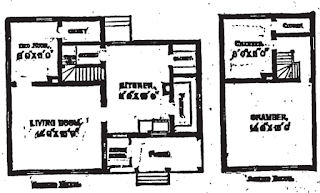
House Plans 2


House Plans 1


House Plans 2


Subscribe to:
Posts (Atom)