Monday, January 18, 2021
Canning Jars
Hi all,
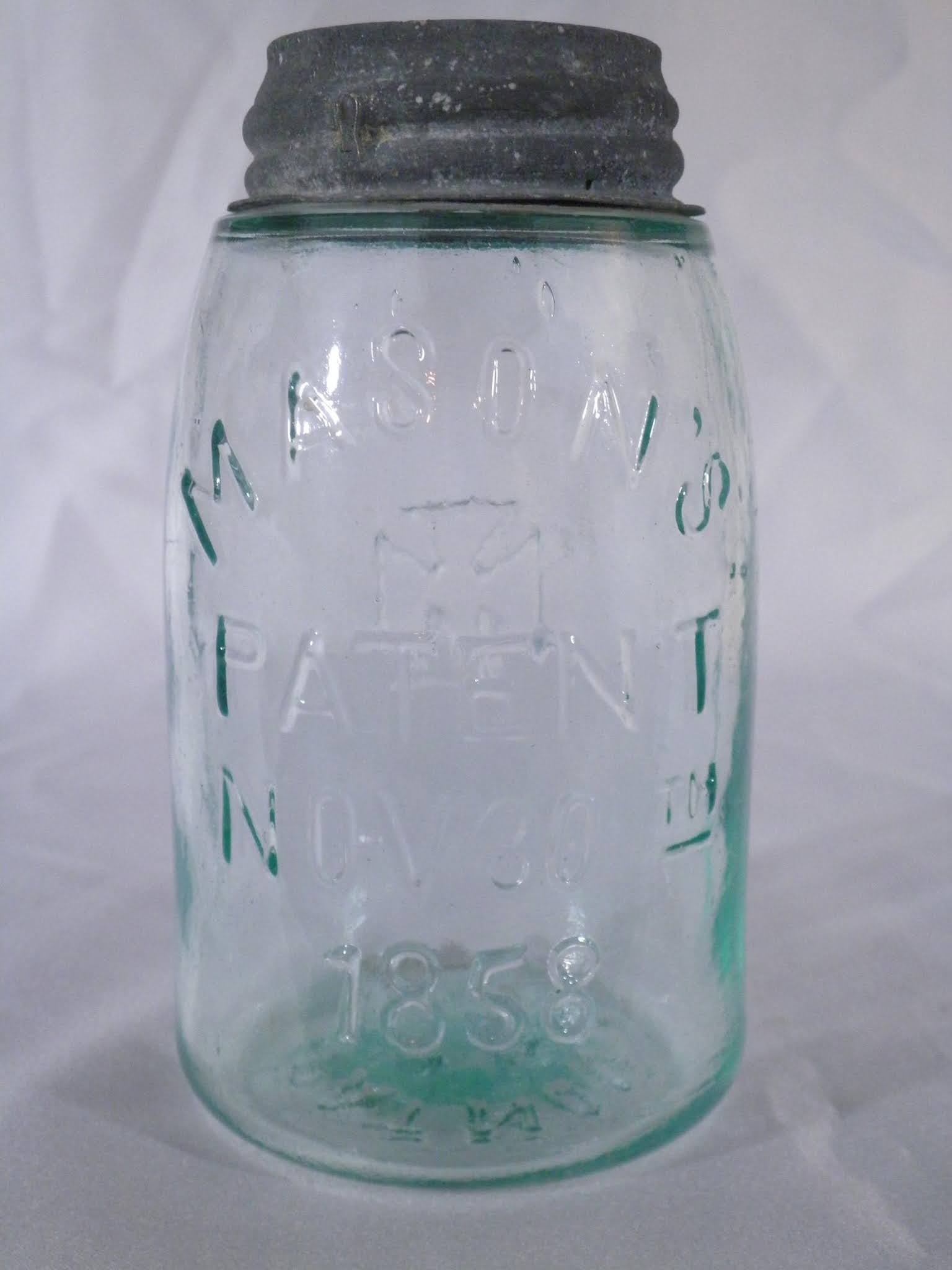
I thought I'd share this image of an 1858 canning jar made by John Mason. His jar was the first to have the twist on lid with a metal lid. A gasket was placed on the top of the canning jar before the lid was screwed on. I found this image of this 1858 Mason jar on sale online in wonderful condition. It's an interesting insight to how soon these kinds of jars were available for canning food for the home-maker.


Tuesday, October 13, 2020
The Glove Men's Attire
THE GLOVE. It is not a universal custom in the United States to wear gloves as part of the ordinary dress of a gentleman, but it is in good taste. The use of the glove when worn should be subject to the following rules:
In walking or afternoon dress, in church, or at places of public amusement, a gentleman should wear gloves of subdued shades. At a full dress social entertainment, where there is dancing or at a wedding, reception or dinner party, he should wear white gloves. At funerals he should wear black gloves. {See Salutations—The Glove.)
SEATED AT THE TABLE Remove your gloves, open your napkin and spread it across your lap. With some it is customary to fasten the napkin across the chest. This practice is not in best style. (See Table Manners.)
Ladies should not eat with their gloves on unless their hands are not fit to be seen.
At all evening receptions and dinner parties, full evening dress for ladies should be rigidly observed. Gentlemen should appear in black, full dress coat and pantaloons, white or black vest, and white necktie and gloves. (Far Dress and Toilettes see General Etiquette.)
In morning calls a gentleman should leave his cane or umbrella in the hall, but carry his hat and gloves in his hand and overcoat over his arm. If necessary he can place his hat on the floor by his side, and not on the mantel-piece or table. In evening calls these articles should be left in the hall or where the servant indicates.
Hand-book of official and social etiquette and public ceremonials at Washington ©1886
Friday, September 20, 2019
Gloves
Hi all,
I don't post much these days but I keep the blog up for reference work. However, I came across this interesting tidbit from the 1891 Britannica.
"Paris is, beyond question, the most important centre of glove-making, and for delicacy of material and beauty of workmanship the productions of some Parisian manufacturers are without any rivals; but it is at Grenoble that French gloves are most extensively manufactured. English gloves, of unfailing excellence of material and workmanship, are principally made at Worcester; and in one specialty— "dogskin gloves made from Cape sheep-skin, having a warm tan color—English makers have no competitors. A very large quantity of cheap but useful gloves are made at Brussels and Copenhagen. During the year 1876,1,084,400 dozen pairs, of a value of £1,380,884, were imported into the United Kingdom from France; from Belgium there were 301,305 dozen pairs, valued at £345,174; and the total imports from all quarters amounted to 1,497,437 dozen pairs, of a value of £1,840,956. In 1878 the total imports were 1,000,040 dozen pairs, valued at £1,302,060.
Buckskin gloves are largely made in the United States, and that branch, together with a limited production of kid and other gloves, is chiefly centred in the village of Gloversville, Fulton co., N. Y. It is estimated that from about 140 separate glove factories in that village not less than two-thirds of the gloves made in the United States are sent out. Kid gloves are made to some extent in New York city."
I don't post much these days but I keep the blog up for reference work. However, I came across this interesting tidbit from the 1891 Britannica.
"Paris is, beyond question, the most important centre of glove-making, and for delicacy of material and beauty of workmanship the productions of some Parisian manufacturers are without any rivals; but it is at Grenoble that French gloves are most extensively manufactured. English gloves, of unfailing excellence of material and workmanship, are principally made at Worcester; and in one specialty— "dogskin gloves made from Cape sheep-skin, having a warm tan color—English makers have no competitors. A very large quantity of cheap but useful gloves are made at Brussels and Copenhagen. During the year 1876,1,084,400 dozen pairs, of a value of £1,380,884, were imported into the United Kingdom from France; from Belgium there were 301,305 dozen pairs, valued at £345,174; and the total imports from all quarters amounted to 1,497,437 dozen pairs, of a value of £1,840,956. In 1878 the total imports were 1,000,040 dozen pairs, valued at £1,302,060.
Buckskin gloves are largely made in the United States, and that branch, together with a limited production of kid and other gloves, is chiefly centred in the village of Gloversville, Fulton co., N. Y. It is estimated that from about 140 separate glove factories in that village not less than two-thirds of the gloves made in the United States are sent out. Kid gloves are made to some extent in New York city."
Saturday, March 31, 2018
April Fool's Day
Yes, it was practiced during the 19th century. Below you will find an excerpt from American Magazine of Useful and Entertaining Knowledge, Vol. 2 ©1836 from Google Books. There are other sources but in this one you get a feel for how it was looked upon by the author.
APRIL FOOLS.
It is a curious fact, that the custom of making April Fools prevails in the most widely separated regions of the globe, and that, everywhere, its origin is hidden in remote antiquity. The Hindoos on the Ganges practise it; in all the European countries it exists, in one shape or another ; the French make what they call April Fish; and, in America, it is one of the few mirthful customs which our fathers brought from merry Old England. When once such a fashion was established, we should suppose that human nature might be pretty safely trusted to keep it up. It is desirable to have the privilege of saying, on one day in the year— what we perhaps think, every day—that our acquaintances are fools. But the false refinement of the present age has occasioned the rites of the holyday to fall somewhat into desuetude. It is not unreasonable to conjecture, that this child's play, as it has now become, was, when originally instituted, a vehicle of the strongest satire which mankind could wreak upon itself. The people of antiquity, we may imagine, used to watch each other's conduct throughout the year, and assemble on All Fools' Day, to pass judgment on what they had observed. Whoever, in any respect, had gone astray from reason and common sense, the community were licensed to point the finger, and laugh at him for an April Fool. How many, we wonder, whether smooth-chinned or gray-bearded, would be found so wise in great and little matters, as to escape the pointed finger and the laugh.
APRIL FOOLS.
It is a curious fact, that the custom of making April Fools prevails in the most widely separated regions of the globe, and that, everywhere, its origin is hidden in remote antiquity. The Hindoos on the Ganges practise it; in all the European countries it exists, in one shape or another ; the French make what they call April Fish; and, in America, it is one of the few mirthful customs which our fathers brought from merry Old England. When once such a fashion was established, we should suppose that human nature might be pretty safely trusted to keep it up. It is desirable to have the privilege of saying, on one day in the year— what we perhaps think, every day—that our acquaintances are fools. But the false refinement of the present age has occasioned the rites of the holyday to fall somewhat into desuetude. It is not unreasonable to conjecture, that this child's play, as it has now become, was, when originally instituted, a vehicle of the strongest satire which mankind could wreak upon itself. The people of antiquity, we may imagine, used to watch each other's conduct throughout the year, and assemble on All Fools' Day, to pass judgment on what they had observed. Whoever, in any respect, had gone astray from reason and common sense, the community were licensed to point the finger, and laugh at him for an April Fool. How many, we wonder, whether smooth-chinned or gray-bearded, would be found so wise in great and little matters, as to escape the pointed finger and the laugh.
Friday, March 30, 2018
Easter & Easter Eggs
Finding accounts of Easter activities for this blog has taken a bit of time. However, I found a few excerpts from different sources about different aspects of Easter Celebrations. I hope you enjoy and that you and your family enjoy this year's Easter celebrations and the reason for the season.
We have an interesting account of the Easter celebration at the Old Ladies' Home in Roxbury, Mass. We cannot print it at length, but it gives so pleasant an expression of the good cheer in a home where the heart helps the hand that we should be sorry not to copy a few words from it.—" The household is up with the robins, who sing their carols around, and the old ladies appear at the breakfast table in best 'bib and tucker." Just as the morning exercises are concluded and the Easter eggs distributed, the city missionary and party arrived and met with a hearty welcome from the family gathered in the parlors. Quavering voices, supported by the full tones of cheery friends, joined heartily in 'Praising God from whom all blessings flow ;' then followed a short Easter service. Easter cards and hymns were distributed, and then goodbyes were said with the hearty response, 'God bless you in your good works and labor of love to-day.'" Source: Lend a Hand Vol. I June 1886
HUNTING FOR EASTER-EGGS.
The Easter-egg is a painted or colored egg used for a present at Easter, a day which occurs on Sunday, the second day after Good-Friday.
The term "Easter" is said to be derived from a Saxon word meaning rising; and Easter is a festival of the Christian Church to commemorate the resurrection.
In the picture, the children are hunting for Easter-eggs, which the good mother has hidden in different parts of the room. The child who finds the most eggs will have the pleasure of making presents of them to whom he or she may choose.
Baby has set his eyes on the egg that lies on the floor. If he takes it up, I hope he will not let it fall, and break it. The other children will not be slow to find the painted eggs. There must be a dozen, or more, of them hidden away. Source: The Nursery Vol. 17-18 pg100 ©1875
And the Easter Parade down 5th Ave. New York City was not really a parade as such but it soon became a tradition. The earliest record I found was in 1865. If you have an additional source, please let us know.
We have an interesting account of the Easter celebration at the Old Ladies' Home in Roxbury, Mass. We cannot print it at length, but it gives so pleasant an expression of the good cheer in a home where the heart helps the hand that we should be sorry not to copy a few words from it.—" The household is up with the robins, who sing their carols around, and the old ladies appear at the breakfast table in best 'bib and tucker." Just as the morning exercises are concluded and the Easter eggs distributed, the city missionary and party arrived and met with a hearty welcome from the family gathered in the parlors. Quavering voices, supported by the full tones of cheery friends, joined heartily in 'Praising God from whom all blessings flow ;' then followed a short Easter service. Easter cards and hymns were distributed, and then goodbyes were said with the hearty response, 'God bless you in your good works and labor of love to-day.'" Source: Lend a Hand Vol. I June 1886
HUNTING FOR EASTER-EGGS.
The Easter-egg is a painted or colored egg used for a present at Easter, a day which occurs on Sunday, the second day after Good-Friday.
The term "Easter" is said to be derived from a Saxon word meaning rising; and Easter is a festival of the Christian Church to commemorate the resurrection.
In the picture, the children are hunting for Easter-eggs, which the good mother has hidden in different parts of the room. The child who finds the most eggs will have the pleasure of making presents of them to whom he or she may choose.
Baby has set his eyes on the egg that lies on the floor. If he takes it up, I hope he will not let it fall, and break it. The other children will not be slow to find the painted eggs. There must be a dozen, or more, of them hidden away. Source: The Nursery Vol. 17-18 pg100 ©1875
And the Easter Parade down 5th Ave. New York City was not really a parade as such but it soon became a tradition. The earliest record I found was in 1865. If you have an additional source, please let us know.
Friday, September 22, 2017
Arctic Expeditions
While searching a bit further on the 1852 Winter I came across this list of expeditions to the Artic. I was personally surprised to find the list dated back to 1848. It lists Ships, Captains, and deaths as well as how many days in Melville Bay.
Arctic Expeditions (from the Times, December 29, 1874).—"The following is a list of ships, comprising Government and Private Expeditions, British and Foreign, which have been on exploring service within the Arctic Circle since the Franklin Expedition sailed. It will be seen that the crews of all these vessels have returned in safety to their respective countries, with only such loss of life as might well have occurred had the men stayed at home :—
1. 1848 to 1849—H.m.'b ship Enterprise, Sir J. C. Ross. One winter, 26 days in Melville Bay.
2. 1848 to 1849.—H.M.'s ship Investigator, Captain Bird. One winter, 25 days in Melville Bay. Seven deaths (one officer) on board the Enterprise and Investigator.
3. 1849 to 1850.—H.M.'s ship North Star, Mr. Saunders. One winter, 57 days in Melville Bay. Four deaths.
4. 1849.—H.M.'s ship Plover, Captains Moore and Maguirc. Three winters. Three deaths.
6. 1850.—H.M's ship Enterprise, Captain Collinson. Three winters. Three deaths.
6. 1850.—H.M.'s ship Investigator, Captain M'Clure. Four winters. Six deaths (one officer).
7. 1850.—H.M.'s ship Resolute, Captain Austin. One winter, 45 days in Melville Bay. One death (accident).
8. 1850.—H.M.'s ship Assistance, Captain Ommanney. One winter, 45 days in Melville Bay. No death.
9. 1850.—H.M.'s ship Pioneer, Lieutenant Osborn. One winter. No death.
10. 1850.—H.M.'s «hip Intrepid, Lieutenant Cator. One winter. No death.
11. 1850.—Brig Lady Franklin, Captain Penny. One winter. No death.
12. 1850.—Brig Sophia, Captain Stewart. One winter. No death.
13. 1850.—Schooner Prince Albert, Captain Forsyth. Summer Cruise.
14. I860.—Schooner Felix, Sir John Ross and Captain Phillips. One winter. No death.
15. 1850.—Advance (American), Lieutenant Griffith. One winter drifting.
16. 1850.—Rescue (American), Lieutenant Dehaven. One winter drifting.
17. 1851.—Schooner Prince Albert, Mr. Kennedy. One winter. No death.
18. 1852.—H.M.'s ship Assistance, Sir E. Belcher. Two winters, 38 days in Melville Bay. No death.
19. 1852.—H.M.'s ship Resolute, Captain Kellett. Two winters, 38 days in Melville Bay. Six deaths.
20. 1852.—H.M.'s ship Pioneer, Commander OBborn. Two winters. No deaths.
21. 1852.—H.M.'s ship Intrepid, Lieutenant M'Clintock. Two winters. No death.
22. 1852.—H.M.'s ship North Star, Mr. Pullen. Two winters. 38 days in Melville Bay. Three deaths.
23. 1852.—Steamer Isabel, Captain Inglefield. No detention in Melville Bay; summer cruise.
24. 1853.—H.M's ship Phoenix, Captain Inglefield. Nine days in Melville Bay; summer cruise.
25. 1854.—H.M.'s ship Phojnix, Captain Inglefield. Took the pack—30 days; summer cruise.
26. 1854.—H.M.'s ship Talbot, Captain Jenkins. Summer cruise.
27. 1853.—Advance (American brig). Dr. Kane. Two winters. Took the pack—10 days.
28. 1857.—Steamer Fox, Captain M'Clintock. Two winters; first winter in pack, second season through in nine days. Three died.
29. 1850.—Schooner United States, Dr. Hayes. One winter, two days in Melville Bay. One death (accident).
30. 1871.—Steamer Poluris, Captain Hall. Twowinters; no detention in Melville Bay. One death.
31. 1873.—Steamer Juniata, Lieutenant Merriman. No detention in Melville Bay ; summer cruise.
32. 1873.—Steamer Tigress, Captain Green. Summer cruise.
Thursday, September 21, 2017
1851-1852 Weather
In a Report of the New Jersey Geological survey I stumbled upon this tidbit. It is amazing where you will find tiny tidbits that can help your story.
1852.—Winter of 1851-2, cold; mean temperatures of the months, 3° to 8° below the average; East river crossed on the ice January 30th, and for three days following; Susquehanna at Havre de Grace frozen over for seven weeks; cold and snows as far south as New Orleans and Jacksonville, Fla.
1852.—Winter of 1851-2, cold; mean temperatures of the months, 3° to 8° below the average; East river crossed on the ice January 30th, and for three days following; Susquehanna at Havre de Grace frozen over for seven weeks; cold and snows as far south as New Orleans and Jacksonville, Fla.
Wednesday, September 20, 2017
Sea Voyage Gingerbread
This recipe comes from Miss Leslie's Lady's New Receipt book ©1850. It could be used by your characters when sending off their spouse, father, brother or sequestered away in the folds of her shirt to prevent sea-sickness, or better yet to hide the morning sickness your character might be expecting. Or what about some busybody seeing your character eating such treats and gossiping that she is pregnant. The list can go on and on. Enjoy playing with the idea of this kind of a recipe for your characters.
SEA-VOYAGE GINGERBREAD.—Sift two pounds of flour into a pan, and cut up in it a pound and a quarter of fresh butter; rub the butter well into the flour, and then mix in a pint of West India molasses and a pound of the best brown sugar. Beat eight eggs till very light. Stir into the beaten egg two glasses or a jill of brandy. Add also to the egg a teacup-full of ground ginger, and a table-spoonful of powdered cinnamon, with a tea-spoonful of soda melted in a little warm water. Wet the flour, &c., with this mixture till it becomes a soft dough. Sprinkle a little flour on your paste-board, and with a broad knife spread portions of the mixture thickly and smoothly upon it. The thickness must be equal all through; therefore spread it carefully and evenly, as the dough will be too soft to roll out. Then with the edge of a tumbler dipped in flour, cut it out into round cakes. Have ready square pans, slightly buttered ; lay the cakes in them sufficiently far apart to prevent their running into each other when baked. Set the pans into a brisk oven, and bake the cakes well, seeing that they do not burn.
You may cut them out small with the lid of a cannister (or something similar) the usual size of gingerbread nuts.
These cakes will keep during a long voyage, and are frequently carried to sea. Many persons find highly spiced gingerbread a preventive to sea-sickness.
SEA-VOYAGE GINGERBREAD.—Sift two pounds of flour into a pan, and cut up in it a pound and a quarter of fresh butter; rub the butter well into the flour, and then mix in a pint of West India molasses and a pound of the best brown sugar. Beat eight eggs till very light. Stir into the beaten egg two glasses or a jill of brandy. Add also to the egg a teacup-full of ground ginger, and a table-spoonful of powdered cinnamon, with a tea-spoonful of soda melted in a little warm water. Wet the flour, &c., with this mixture till it becomes a soft dough. Sprinkle a little flour on your paste-board, and with a broad knife spread portions of the mixture thickly and smoothly upon it. The thickness must be equal all through; therefore spread it carefully and evenly, as the dough will be too soft to roll out. Then with the edge of a tumbler dipped in flour, cut it out into round cakes. Have ready square pans, slightly buttered ; lay the cakes in them sufficiently far apart to prevent their running into each other when baked. Set the pans into a brisk oven, and bake the cakes well, seeing that they do not burn.
You may cut them out small with the lid of a cannister (or something similar) the usual size of gingerbread nuts.
These cakes will keep during a long voyage, and are frequently carried to sea. Many persons find highly spiced gingerbread a preventive to sea-sickness.
Tuesday, September 19, 2017
Almond Cream Pudding
Okay this was a new recipe for me. Perhaps, some of you have heard of it and possibly have eaten it before and if that is so, let us know. On the other hand, this recipe is a lot of work and has items I've never heard about before (definitions of those are below the recipe) so many it isn't made any longer.
Below is a recipe from the Miss Ledlie's Lady's New Receipt Book ©1850
ALMOND CREAM.—Take a pound of shelled sweet almonds, and two ounces or more of shelled bitter almonds, or peach-kernels. Blanch them in scalding water, throwing them as you proceed into a bowl of cold water. Then pound them (one at a time) in a mortar, till each becomes a smooth paste; pouring in, as you proceed, a little rosewater to make the almonds white and light, and transferring the paste to a plate as you go on. Then when they are all done, mix the almonds with a quart of rich cream, and a quarter of a pound of powdered loaf-sugar. Add half a dozen blades of mace; put the mixture into a porcelain kettle, and boil it, slowly, stirring it frequently down to the bottom. Having given it one boil up, remove it from the fire, take out the mace, and when it has cooled a little, put the cream into glass cups, grating nutmeg over each. Serve it up quite cold. You may ornament each cup of this cream with white of egg, beaten to a stiff froth, and heaped on the top.
Definitions:
Loaf-Sugar it is sold in a solid block and is granulated. A tool such as a sugar nip was used to break off chunks of this sugar.
Blades of Mace: is the outer lacy looking shell of nutmeg. Ground mace which we all tend to be accustomed to today is made from this lacy scarlet-colored shell. Once the shell is dried fades to light brown.
Below is a recipe from the Miss Ledlie's Lady's New Receipt Book ©1850
ALMOND CREAM.—Take a pound of shelled sweet almonds, and two ounces or more of shelled bitter almonds, or peach-kernels. Blanch them in scalding water, throwing them as you proceed into a bowl of cold water. Then pound them (one at a time) in a mortar, till each becomes a smooth paste; pouring in, as you proceed, a little rosewater to make the almonds white and light, and transferring the paste to a plate as you go on. Then when they are all done, mix the almonds with a quart of rich cream, and a quarter of a pound of powdered loaf-sugar. Add half a dozen blades of mace; put the mixture into a porcelain kettle, and boil it, slowly, stirring it frequently down to the bottom. Having given it one boil up, remove it from the fire, take out the mace, and when it has cooled a little, put the cream into glass cups, grating nutmeg over each. Serve it up quite cold. You may ornament each cup of this cream with white of egg, beaten to a stiff froth, and heaped on the top.
Definitions:
Loaf-Sugar it is sold in a solid block and is granulated. A tool such as a sugar nip was used to break off chunks of this sugar.
Blades of Mace: is the outer lacy looking shell of nutmeg. Ground mace which we all tend to be accustomed to today is made from this lacy scarlet-colored shell. Once the shell is dried fades to light brown.
Monday, September 18, 2017
Linen Weddings
This comes from the Ladies' Home Journal ©1893
THE LINEN WEDDING
MAY be celebrated twenty years from the "day of days " in a woman's life. It must be confessed that, although it furnishes an excellent opportunity for pretty presents in embroidered doilies and all manner of other napery, it is less suggestive to a hostess as a "theme" for an entertainment. A dinner, to which only intimate friends and the families of bride and groom are invited, seems more appropriate than any more ambitious observance of the day.
The invitations may be written on squares of linen in indelible ink and inclosed in envelopes of the same material. The elaborate folding of napkins is no longer in vogue, but the fashion might be revived on such an occasion when linen is to be made the prominent feature. Any pretty drawnwork or embroidered linen may be appropriately introduced. Napkins folded to represent a succession of scallop-shells or fans may surround and conceal the dish holding the flowers in the centre of the table. No flowers are so suitable for the occasion as the pretty blue blossoms of the flax plant, but they are hardly vivid enough by themselves to be effective, as the table is so severely white. Bright poppies and yellow-hearted daisies mingled among the blue flax make a charming centrepiece. Small squares of fine linen with fringed edges may be embroidered with the guests' names in blue or red (Kensington stitch) in bold English writing, and will answer very well for name-cards when made to adhere to squares of Bristol-board bymeans of a little flour paste.
Nothing makes a better surface for watercolor painting than linen, and imagination may run riot if the hostess be an artist. Upon every dish a round, fringed doily should be placed.
A really dainty flower-holder may be made by placing a slender thin glass tumbler in the centre of a round piece of fine linen, edged with lace an inch or two wide. This should be drawn up and plaited around the edge of the tumbler and tied with narrow ribbon in many loops. The lace stands out like a ruffle, making a border around the flowers.
THE LINEN WEDDING
MAY be celebrated twenty years from the "day of days " in a woman's life. It must be confessed that, although it furnishes an excellent opportunity for pretty presents in embroidered doilies and all manner of other napery, it is less suggestive to a hostess as a "theme" for an entertainment. A dinner, to which only intimate friends and the families of bride and groom are invited, seems more appropriate than any more ambitious observance of the day.
The invitations may be written on squares of linen in indelible ink and inclosed in envelopes of the same material. The elaborate folding of napkins is no longer in vogue, but the fashion might be revived on such an occasion when linen is to be made the prominent feature. Any pretty drawnwork or embroidered linen may be appropriately introduced. Napkins folded to represent a succession of scallop-shells or fans may surround and conceal the dish holding the flowers in the centre of the table. No flowers are so suitable for the occasion as the pretty blue blossoms of the flax plant, but they are hardly vivid enough by themselves to be effective, as the table is so severely white. Bright poppies and yellow-hearted daisies mingled among the blue flax make a charming centrepiece. Small squares of fine linen with fringed edges may be embroidered with the guests' names in blue or red (Kensington stitch) in bold English writing, and will answer very well for name-cards when made to adhere to squares of Bristol-board bymeans of a little flour paste.
Nothing makes a better surface for watercolor painting than linen, and imagination may run riot if the hostess be an artist. Upon every dish a round, fringed doily should be placed.
A really dainty flower-holder may be made by placing a slender thin glass tumbler in the centre of a round piece of fine linen, edged with lace an inch or two wide. This should be drawn up and plaited around the edge of the tumbler and tied with narrow ribbon in many loops. The lace stands out like a ruffle, making a border around the flowers.
Wednesday, September 13, 2017
Hurricane Irma
Hi all,
Sorry for no new posts due to Hurricane Irma. We faired well with loss of power for less than 24 hours and no damage to our home. We are grateful to the Lord for our protection during this storm.
I hope to get some posts done tomorrow.
In His grip,
Lynn
Sorry for no new posts due to Hurricane Irma. We faired well with loss of power for less than 24 hours and no damage to our home. We are grateful to the Lord for our protection during this storm.
I hope to get some posts done tomorrow.
In His grip,
Lynn
Tuesday, September 12, 2017
1895 Hair Dye
Here is an advertisement from an 1895 newspaper offering to wash that gray away. Okay, so it isn't actually that but I remember those old commercials. Hair Dye has been around for centuries.


Monday, September 11, 2017
Gig, A Flirting Girl
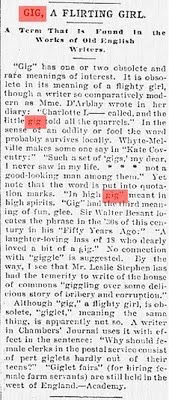
Below is an article I found in an 1899 Newspaper that I thought was interesting in terms of word use. We've discussed often on various writer loops the way certain words were in vogue at certain times and how they can have totally different meanings in other times. For example the gig. A gig concerning my research into 19th century Carriages & Wagons is a light, two wheeled carriage. Obviously it has another meaning as you can read from this article. Enjoy!

Friday, September 8, 2017
Crystal Wedding (Anniversary today)
This comes from the Ladies' Home Journal ©1893
THE CRYSTAL WEDDING
THE fifteenth anniversary may be effectively celebrated by an '' afternoon tea" out-of-doors, if the "happy pair" be the fortunate possessors of a lawn and shade trees. A few little tables in sheltered nooks—and a larger one for the more important dishes—are suggestive of pleasure at first sight. In the centre of the large table I would place a cut-glass dish, holding a mass of red roses.
As one is confined to glass dishes for everything at a crystal wedding its lack of color is better supplemented by red flowers than those of other shades.
A glass dish or vase filled with roses, geraniums or carnations might ornament each of the little tables, for the lavish month of June is so prodigal of blossoms.
It is the custom in Russia to serve tea in very thin glasses, in preference to cups, and as it is taken with lemon, instead of cream, it is much more dainty in appearance. The Austrians also prefer glasses to cups for their coffee, and the habit once formed 110 cup seems thin enough. Any excuse to use glass is admissible. The lemonade and ices are, of-course, served in tumblers and glass saucers. Instead of sugar for the tea and coffee the crystals of white rock candy may be used, and are no mean substitute. A profusion of cut glass on the large table makes, of course, an attractive decoration in itself, but the pressed glass now imitates it very nearly and is wonderfully cheap.
Should a dinner be preferred every possible device for using glass should be taken advantage of.
A large piece of looking-glass bordered with red roses, or other flowers if desired, may be placed on the table, a glass bowl of flowers in the centre. If one be not fortunate enough to have inherited old fashioned glass candlesticks with long pendent prisms, ordinary glass ones are cheap and easily procured. The shades may have a fringe of cut-glass beads around them, that, catching the light, has a pretty, prismatic effect.
For name-cards small, round, beveled mirrors, three inches in diameter, may be easily inscribed with the names of the guests in any colored ink preferred. Wreaths of tiny blossoms painted along the edges would, of course, greatly enhance their beauty. Should these prove too expensive a simple white card, around the edges of which crystal beads are thickly sewed, forming a sort of a frame, may not be an unacceptable substitute.
THE CRYSTAL WEDDING
THE fifteenth anniversary may be effectively celebrated by an '' afternoon tea" out-of-doors, if the "happy pair" be the fortunate possessors of a lawn and shade trees. A few little tables in sheltered nooks—and a larger one for the more important dishes—are suggestive of pleasure at first sight. In the centre of the large table I would place a cut-glass dish, holding a mass of red roses.
As one is confined to glass dishes for everything at a crystal wedding its lack of color is better supplemented by red flowers than those of other shades.
A glass dish or vase filled with roses, geraniums or carnations might ornament each of the little tables, for the lavish month of June is so prodigal of blossoms.
It is the custom in Russia to serve tea in very thin glasses, in preference to cups, and as it is taken with lemon, instead of cream, it is much more dainty in appearance. The Austrians also prefer glasses to cups for their coffee, and the habit once formed 110 cup seems thin enough. Any excuse to use glass is admissible. The lemonade and ices are, of-course, served in tumblers and glass saucers. Instead of sugar for the tea and coffee the crystals of white rock candy may be used, and are no mean substitute. A profusion of cut glass on the large table makes, of course, an attractive decoration in itself, but the pressed glass now imitates it very nearly and is wonderfully cheap.
Should a dinner be preferred every possible device for using glass should be taken advantage of.
A large piece of looking-glass bordered with red roses, or other flowers if desired, may be placed on the table, a glass bowl of flowers in the centre. If one be not fortunate enough to have inherited old fashioned glass candlesticks with long pendent prisms, ordinary glass ones are cheap and easily procured. The shades may have a fringe of cut-glass beads around them, that, catching the light, has a pretty, prismatic effect.
For name-cards small, round, beveled mirrors, three inches in diameter, may be easily inscribed with the names of the guests in any colored ink preferred. Wreaths of tiny blossoms painted along the edges would, of course, greatly enhance their beauty. Should these prove too expensive a simple white card, around the edges of which crystal beads are thickly sewed, forming a sort of a frame, may not be an unacceptable substitute.
Thursday, September 7, 2017
Farm Land for sale 1874
Here's an ad from American Agriculturalist ©1874 encouraging farmers to go out and settle the west. The price was $10 per acre. You didn't have to pay for the first four years. You can pay the note off early. All enticing the farmer to come and settle Nebraska.


Subscribe to:
Posts (Atom)