Wednesday, September 9, 2015

1880 Fashions

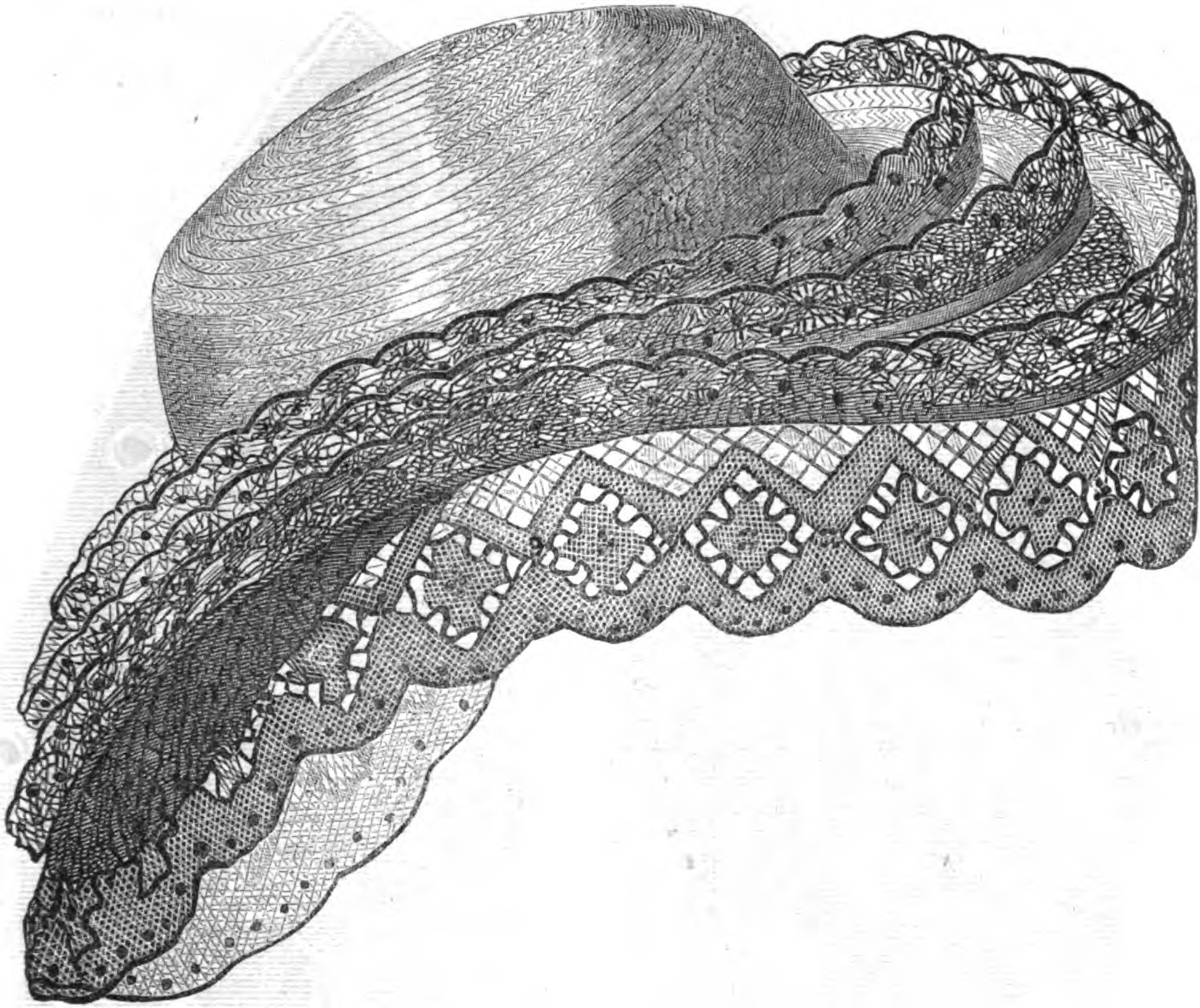
Today I'm starting with some images of Bonnets and Hair styles. Below that you'll find various ladies dresses for different functions.

Bonnets

Hair Styles

Walking Dresses

Visiting Dress

Mourning Dress

Ladies Dresses

Tuesday, September 8, 2015

Eat Your Veggies

Believe it or not vegetables and their importance in our diet has been something debated for many years. Below I'm taking excerpts from Letters to a Young Housekeeper about various vegetables.

Green peas need no accessories of parsley or mint, as French and German cookery prescribe. They are of such fine and delicate flavor that any kind of spice, be it exotic or herby, would merely deteriorate them.

Take a round platter, place in the middle of it a fine head of cauliflower boiled in salted water with the addition of a piece of butter the size of half an egg. Encircle it with composed a wreath of green peas, which in turn you sur0f vegetables round by a rim of boiled rice. Put outside of it
and meat. A circle of boiled carrots cut into wheels, and surround the whole either with lamb chops, or stewed sweetbreads.

Next to green peas come string beans when quite young, which, however, if maturer, are surpassed in their nutritive qualities by kohlrabi, — a vegetable introduced from Germany. Cook string beans thus: String them and how to cook them.

For nothing is more disagreeable than to eat beans not entirely freed of their strings. Wash them very well through several waters, rubbing them through your hands to get rid of parasites which are apt to cling to them, and are invisible to the naked eye. This done, you cut them slantwise into pieces an inch wide, and parboil them as stated before; then drain and put them into boiling mutton or beef broth enough to cover them. They need more or less boiling according to their kind or age; not less than one hour. Some need two hours, some even more; but I would say the latter are not fit to eat because too hard to digest. By slow boiling and evaporation the most of the liquid ought to disappear; the rest must be served with the beans. They need more fat than peas, not having any themselves. Serve them with beef, mutton, or pork.

Lima bean that it must have a large percentage of carbohydrates. Cook them in boiling water, slightly salted. Do not take any more water than will cook them, How to cook and when tender add a little hot milk, in which a Lima beans good-sized piece of butter has been melted. Add some salt. Leave them standing in a hot place for a short while to get saturated with the milk.

Spinach is a highly valuable vegetable because of its mineral matters, especially iron and lime. Therefore, you must be most careful not to waste its precious juices by throwing away the water it is cooked in, or pressing its leaves before chopping it fine. Some, indeed, prefer not to chop it at all, and they are no doubt right; but table fashion will have it chopped.
For a puree of spinach, pick the leaves over carefully, omitting the coarse and thick-ribbed ones; wash them several times, A puns throw them in plenty of boiling water, well salted;
of spinach. leave them in a few moments, then drain, and cool them off in cold water, from which drain them again. Now chop them very fine in a wooden bowl. Take a saucepan, put in a piece of butter, and when hot add to it your spinach. Stew very gently in its own juice, merely adding a little boiling water, if necessary, to prevent scorching. When done, which will be in about one-half hour, the spinach ought to have sufficient consistency to serve it heaped up in a dish, or to use it as a garnish around any kind of meat.
If spinach is served as a course by itself, a garnish of croutons, or quarters of hard boiled eggs, or both is in place. A puree Spinach as an of spinach is suitable for an entremets—a course entremets. between the roast and dessert—and as such is nice accompanied by either poached eggs, or pancakes1 rolled up.
A cupful of spinach puree left over will furnish you with material for a spinach pudding on the following day.

To boil cauliflower, put it upside down into cold water strongly salted; this destroys the insects apt to vegetate between the roses or flowerets. Leave the head in but a short time, then rinse it off, and put it into boiling water slightly salted, top r downward. See that it is fully covered with water, and boiling continuously. It will be done in twenty to thirty minutes. It gets tasteless if you cook it after it is tender, which you can test with a larding-needle thrust through the middle. Lift it out carefully, and place it on a platter, then pour over it a bechamel sauce for which you use some of the water it was boiled in. Or you may use the folA sauce for lowing sauce: For a small head of cauliflower cauliflower. \2k& half a pint of the water in which it was boiled (or the same amount of veal broth) ; add to it two ounces of butter, a teaspoonful of flour, a taste of nutmeg, and the yokes of two eggs beaten beforehand. Stir the whole over the fire until it just comes to a boil, and no longer. Continue to stir for several minutes after you have taken it off the fire, to avert all danger of curdling.
To cook cauliflower with cheese, take a dish and moisten it with a thick bechamel sauce; dust over it some grated Parmesan cheese; then arrange on it a layer of Cauliflower.
Cauliflower served with either pigeons, chickens, veal cutlets, or roast beef, is a good combination.

To prepare asparagus for boiling, shave off with a sharp knife the fine outside fibres, beginning below the sparagus. nead downward, and cut away the woody end below. Do it just before needed. Rinse in cold water, then tie the stalks together by the dozen, and put them in plenty of boiling water slightly salted. They ought to be done in twenty minutes. If left boiling too long, they will harden, and, moreover, lose their flavor together with their delicate mineral matters, which render asparagus so valuable. Remove the strings after they are placed on the dish they are to be served in. Have with them some melted butter, or a bechamel sauce made slightly acid, and thickened with the yoke of one or more eggs. A sauce Hollandaise1 agrees well with them. But whatever sauce you make, always use for it some of the water in which the asparagus was boiled, because it absorbs part of its flavor and wholesome properties.

To boil cabbage, cut the heads into quarters, taking out the stalks inside. Treat it like cauliflower in cleansing it.

Red cabbage is finer and more delicate than the white kind. In Germany it is cooked in the way which follows, when it is served with partridges in their proper season. It
Red cabbage is very good, also, with roasted pork, or boiled ham. Cut a large head, or two small ones, into quarters, and after removing the hard parts, shred fine with a sharp knife. Put it in a stew-pan, in which a tablespoonful of lard, or the same amount of pork-drippings, has been heated. Cover it up, and let it stew over a moderate fire, shaking it and tossing it from time to time, for half an hour. Then add half a cupful of beef broth, and an hour later a wineglassful of cidervinegar and twice as much claret. Add also a teaspoonful of salt and the same amount of granulated sugar, and continue stewing until quite tender. The longer you boil this dish of cabbage, the better it will be; only be sure and do not add the vinegar and wine too long before serving, since they lose by cooking. If you prefer not to use wine, you will have to double the quantity of vinegar, and increase that of sugar also.

Monday, September 7, 2015

1893 Large Barn Plans

As the 19th Century progressed larger farms were being built. Below is an example of one such farm. David Lyman lived in Conn. and had this barn built. I've included what the author of the Barn Plans and Outbuildings author wrote.

THE BARN" OF MR. DAVID LYMAN.
Among the many large and expensive barns now scattered through the country, there are few more thoroughly satisfactory to old school farmers with broad ideas, than one built by the late Mr. David Lyman, of Middlefleld, Connecticut. Mr. Lyman required a very large barn for his farm purposes simply, and built one, a front view and interior plans of which are here given. The elevation of the building, figure 1, shows entrances to its two main floors; there is a basement below.
The Upper, Or Hay Floor.—This floor is shown in figure 2 ; all the hay, grain, and straw are stored here. It maintains the same level throughout. Two thrashing floors cross the building, and are entered from the high ground on the west by a very easy ascent. The main entrance crosses over an engine room, seen in figures 1 and this room is built of stone, arched above, and is roomy as well as secure.
By means of a hay fork and a number of travellers, the hay is taken from the loads and dropped in any part of the immense bays. The forks are worked by one horse, attached to a hoisting machine, of which there are two, placed near the great doors during the haying season, as indicated by the letters marked H, P, in the plan, figure 2.
On the main floor are bins for grain and ground feed, provided with shutes connecting them with the feeding floor. There are hay scales, also—a fixture in one of the floors—which afford the means of being very accurate in many things, in regard to which guess work is ordinarily the rule. The great ventilators, so conspicuous in figure 1, pass from the feeding floor to the roof, and are furnished with doors at different elevations, quite to the top of the mow, thus forming convenient shutes to throw down hay or straw. A long flight of stairs passes from the principal barn floor to the cupola, from wl.ich a magnificent view is obtained of the whole farir. and surrounding country.
The Feeding Floor is entered by several doors. Two double doors open upon a spacious floor in the rear of the horse stalls, which extends through the middle of the main barn. The northwest corner, figure 3, is occupied by a large harness and tool room, with a chimney and a stove. On the right of the front entrance is the carriage room, which is closed by a sliding door, or partition. There is room on the open part of this floor, behind the horse stalls, and adjacent, to drive in three wagons at a time, and let the horses stand hitched. Between the ox stalls in the south wing, is a ten-foot passage way through which carts with roots or green feed may be driven, the stairs in the middle being hinged at the ceiling and fastened up. The stalls are seven feet wide, and arranged to tie up two cattle in each. A gutter to conduct off the urine runs along behind each range of stalls, and there are well secured traps, one in about every fifteen feet, through which the manure is dropped to the cellar. The letter C, wherever it occurs in figure 3, indicates a trap door of a- manure drop. The letter D is placed wherever there are doors which, in the engraving, might be taken for windows.
The cattle pass to the yards through doors in the ends of the wings. The south yard is nearly upon a level with the floor, sloping gradually away toward the south and east; but the large barn yard is on the level of the manure cellar, and an inclined way gives access to the yard on the east side, from the cow stalls. Three roomy, loose boxes are provided, one for horses, and two as lying-in stables for cows. Near the points marked W, and F, stands the hydrant for flowing water, and the trough for mixing feed, and here, too, the shutes for grain and cut feed discharge from the floor above.
Ventilation And Light.—Four immense ventilating trunks, four feet square, rise from the feeding floor straight to the roof. These are capped by good ventilators of the largest size, and cause a constant change of air in the stables, the draft being ordinarily sufficient to be felt like a fresh breeze, by holding the hand anywhere within a few feet of the openings. This keeps the air in the whole establishment sweeter and purer than in most dwellings. The windows on all sides of this floor are of large size, with double sashes, hung with weights.
The Barn Cellar.—This is arranged for hogs, roots, and manure. The fixed partitions in the cellar are only two, one enclosing the root cellar, and the other, outside of that, shutting off a wide, cemented passage way, extending from the door at the northeast corner, around two sides of the root cellar, as shown in figure 4. The rest of the cellar is occupied by the manure, and hogs are enclosed in different parts of the cellar, according to convenience.
Size Of Bars'.—The building covers more than onefifth of an acre of land, and thus there is over three-fifths of an acre under a roof. The main barn is fifty-five by eighty feet. The wings are each fifty-six feet long, the south one being thirty-five wide, and the east wing thirtyone and one-half feet wide. The four leading points sought for and obtained were: first, economy of room under a given roof, second, plenty of light, third, plenty of air, and ventilation which would draw off all deleterious gas as fast as generated, and fourth, convenience to save labor. Saving of manure, and many other things were of course included. The windows are all hung with pulleys, and are lowered in warm days in winter, and closed in cold days. This is important.

Friday, September 4, 2015

Carpets

Below is an excerpt from the book "Art Decoration Applied to Furniture" regarding Carpets. Skim the article for some interesting tidbits in what went into selecting a carpet for your home during the 19th Century. The book was published in 1878.

CARPETS.
AFTER the appearance of the hall, the carpets give the first impression of the house to the person who enters, and they afford constant and countless sensations to the person who stays —unconscious sensations of comfort, if they are suitable; very conscious and continual ones of discomfort and annoyance, if they are inharmonious, glaring, and self-asserting.

The carpet is to the room exactly what the background is to the picture: it throws up the whole effect, the main features and their suggestions, and is content with that part. The moment it makes itself obtrusive or in the least degree noticeable, it becomes vulgar and disagreeable. It should, indeed, be such that one forgets to observe it, or if caused to do so by any accident, finds its perfection and quiet beauty with a little pleased surprise. What is usually called the quality of the carpet is of no sort of consequence in comparison to these qualities, although the want of harmony could hardly fail to be felt if a rich tapestry were laid upon the floor of an inferior little room with shabby walls and cheap chairs, or if a common ingrain were stretched upon the floor of a drawing-room with inlaid walls, boule cabinets, Venetian mirrors, and gilt sofas. It goes without saying, of course, that the unities in this regard are just as much to be preserved in the furnishing of a room as in the composition of a drama or any other work of art, and not unity of style so much as of character: the room makes its toilet; and we should think but poorly of the lady's taste who, with her trailing satins and her jewels, wore calf-skin brogans and cotton gloves.
The color of the carpet should always be chosen in relation to the general design of the room. To secure a thoroughly pictorial effect to the eye as a whole, and a comfortable one to the senses, the carpet, a little darker than other portions, should present the main body tint from which the rest of the room works up in lighter tints, unless strong contrasts rather than blending shades are desired.

The figure, or pattern, of the carpet should usually be small, and always should be treated conventionally, or with a near approach to the conventional, that is, without the attempt at natural imitations of fruit and flowers and Cupids and shells, but in the suggestions of things arranged upon geometrical base, better if the repeat is not to be traced at first glance. If the colors are well mingled, bit by bit will come out in its turn, and what produces but a negative effect altogether will be seen by itself to be bright and rich and fine.

Thursday, September 3, 2015

Gothic Furniture Design from the 19th Century

So you thought Gothic elements of design went out long before the 19th century, apparently that is not true. Here are some examples of Gothic furniture design from a 19th Century source. These are three chair designs from 1854 with some detail illustrations.
Three Chairs

Chair Posts Designs

Detailed Illustrations from various parts of the wood carvings.

Wednesday, September 2, 2015

1859 Fashions

Below are 10 of the 90 images I have from an 1859 publications.

Women

Cloak
Opera Cloak

Everyday

Bonnets

Children

Head-Dresses

Tuesday, September 1, 2015

Oysters

Since it's the first Tuesday in September an "r" month I thought I'd post some recipes for Oysters. In case you are unaware you don't want to eat or harvest oysters during months that don't have an 'r' according to some 19th Century sayings.

OYSTERS.
Raw Oysters.—Eat raw oysters as plain and as free from
condiments as possible, and always on the deep shell in their own liquor. The average American orders a dozen on the half-shell and then drowns his pets in vinegar, pepper, salt, horse-radish, etc., washing them down with some malt beverage, pays his check, and disappears. The next day he goes through the same performance, and the not over-conscientious oyster-man, knowing his weakness for condiments, can easily palm off on him a "Eockaway Cull" for a Blue Point or a Green Point, or he may give him a "deep-water native " for almost any particular kind or brand he may want, and he cannot detect the difference in their flavor, owing to his excessive use of condiments. A little lemon-juice is all that is necessary, if you will not eat your saline dainties natural.
The heartless oyster-fiend who opens your oysters by smashing the shell should be avoided, for it is crueltv, to say the least. We can forgive him for spattering our clothing with shells, mud, and dirty water, but filling our mouths with these things is pure ugliness. Order a quart of the hivalves to be sent home, and this oyster-butcher endangers the health of your family should any of them swallow a particle of the shell. The true lover of an oyster should have some feeling for his little favorite, and patronize establishments only where they contrive to open thorn (Boston fashion) so dexterously that the mollusk is hardly conscious he has been removed from his lodging "till he feels the teeth of the piscivorous gourmettickling him to death."

Roast Oysters on half-shell.—Open a dozen large oysters on deep shell; add a walnut of butter, with a little salt and mixed pepper (red and black) and a pinch of cracker-dust to each. Place them on a broiler over a sharp, clear fire until done, and serve.
Families not having all the conveniences for roasting oysters "restaurant fashion " will find the above receipt acceptable; though I must confess it is quite a treat to our Western cousins to ask them down into the kitchen of an evening, and serve up a peck of oysters roasted in the shell direct from the fire, with no other tool to pick them out of the coals than the old tongs the moment they pop open. You may possibly burn a finger or two, but what of that so long as the young folks have had a good time?

Oysters escalloped.—In a deep yellow dish place a layer of oysters and cover them with cracker-dust (add an ounce of butter to each layer of cracker-dust); pepper and salt to taste; another layer of oysters, another of cracker-dust, and Bo on until the dish is full. Moisten the dish with the juice of the oysters or hot water to prevent its burning, and bake a nice brown.

Oyster Patties.—Poll out some very light puff paste half an inch thick; stamp it in rounds with a cutter three inches in diameter; press a small cutter two inches in diameter on the middle of each to the depth of a quarter of an inch. Place the rounds on a buttered tin, baste them lightly with egg, and bake in a quick oven. "When done take them out, remove the centre-piece, scoop out a little of the inside, and fill the shells with the prepared oysters.
Parboil twenty-five oysters in their own liquor; remove the oysters and season the liquid with lemon-peel, nutmeg, and pepper; strain, and thicken with a heaping tablespoonful of flour, one and a half ounces of butter, a wineglassful of rich cream; mix, and then add the oysters. Simmer all together a few minutes, fill the shells, and serve.
Scallops and clams cut up fine, with a sauce made on the same principle, make a very nice patty.

Oyster toast.—Select fifteen plump oysters; mince them, and season with mixed pepper and a pinch of nutmeg; beat the yolks of four eggs and mix them with half a pint of cream. Put the whole into a saucepan and set it over the fire to simmer till thick; stir it well, and do not let it boil lest it should curdle. Toast five pieces of bread and butter them; when your dish is near boiling-point remove it from the fire and pour it over the toast.

Fried oysters.—Beat up the yolks of four eggs with three tablespoonf uls of sweet oil, and season them with a teaspoonf til of salt and a salt-spoonful of cayenne pepper; beat up thoroughly. Dry twelve fat oysters on A napkin; dip them in the egg-batter, then in cracker-dust; shake off the loose cracker-dust, dip them again in the egg-batter, and lastly roll them in fine bread-crumbs. iVy in very hot fat, using fat enough to cover them. The oil gives them a nice flavor(Private receipt of a prominent Philadelphia caterer.)

Broiled oysters.—Rub the bars of a wire broiler with a little sweet butter. Dry twelve large, fat oysters and place them upon the broiler plain. Broil them over a clear fire, and when done on both sides send to table on a piece of buttered toast, with a little melted butter in a separate dish. Should you hanker after a delightful case of dyspepsia cover them with egg-batter and roll them in crumbs before broiling.
Oysters a la Poulette.—Blanch a dozen oysters in their own liquor; salt and remove the oysters; add a tablespoonful of butter, the juice of half a lemon, a gill of cream, and a teaspoonful of flour. Beat up the yolk of one egg while the sauce is simmering; add the egg, and simmer the whole until it thickens. Place the oysters on a hot dish, pour the sauce over them, sprinkle a little chopped parsley on top, and send to table. (This is a favorite dish of Hotel Brunswick habitues in New York.)

Monday, August 31, 2015

1885 Rural House Designs

Hi all,
Here are some 1885 floor plans and images of different rural home designs.

Five Room Cottage
Downstairs
Upstairs

8 Room Dwelling
Floor Plans

Design 3
Downstairs
Upstairs

Design 5
Downstairs
Upstairs

Friday, August 28, 2015

Wedding Anniversaries and Social Etiquette

Earlier this week a fellow writer Dawn Kinzer (Click her name to go to her page.) shared an anniversary card she found in her family belongings from the 1800's. I've covered anniversaries before but this list found in "Hand-book of Official and Social Etiquette" has a list that is a bit different. It also has the suggested layout of the invitation cards. At the bottom ck out Dawn's family's card.

WEDDING ANNIVERSARIES. The celebration of wedding anniversaries has always been an occasion of enjoyable reunion among the participants in the event itself, and a few intimate friends. In order to adapt the occasion to some suitable recognition, designations have been given to these anniversaries, and while gifts are not obligatory, and the announcement '' No presents received" on the invitation cards is desirable in the later anniversaries, a remembrance of an inexpensive character of the material named greatly contributes to the entertainment of the occasion.
These yearly anniversaries are as follows:
The first anniversary is the Cotton Wedding. The invitations are printed on cotton and any presents should be of the same material.
The second anniversary is the Paper Wedding. The invitations are printed on paper, and the most suitable presents are books or any other articles of paper.
The third anniversary is the Leather Wedding. The invitations are printed on leather, and any presents should be of the same material.
The fourth anniversary is the Straw Wedding. The invitations are printed on straw colored paper, and presents should represent straw.
The fifth anniversary is called the Wooden Wedding. The invitations should be printed on thin cards of wood, or on wedding paper, enclosing a ard of wood. The presents should be of any article of wood.
The seventh anniversary is the Woolen Wedding. The invita.ions should be printed on woolen and presents should be of the same material.
The tenth anniversary is called the Tin Wedding. The invitations should be printed on tin foil, with a mongram in silver, or on wedding note paper in black, enclosing a tin card. Presents should be of tin.
The twelfth anniversary is called the Linen Wedding. Invitations are printed on linen in gold or silver. The envelopes should also be of linen. Any presents should be of the same.
The fifteenth anniversary it called the Crystal Wedding. The invitation5 should be printed on sheets of gelatine or white wedding note sheets, enclosing a card printed on mica. Pre.ents of any articles oi glass are appropriate.
The twentieth anniversary is called the China Wedding. The invitations are printed on cards with a china finish. Presents should be of china.
The twenty fifth anniversary is called the Silver Wedding. The invitations should be printed on silver bronze or fine white paper with monogram or crest in silver. The presents should be of silver.
As articles in silver are expensive, out of consideration for many who might not be able to afford a present, it is proper to print at the bottom of the invitation: "It is preferred that no presents be offered."
This rule will apply to all wedding invitations following the tin wedding.
The thirtieth anniversary is called the Peail Wedding. The invitations should be printed on pearl tinted paper with monogram of pearls stamped in silver. The presents should be appropriate if given.
The thirty-fifth anniversary is called the Coral Wedding. The invitations should be printed on fine quality of pink tinted paper. Any presents should be of jewelry representing coral.
The forty-fifth anniversary is called the Bronze Wedding. The invitations are printed on bronzed stationary, and any presents should be of bronze.
The fiftieth anniversary is called the Golden Wedding. But few couples ever reach this ripe old age of matrimonial companionship, and the occasion therefore is more of a family nature, the effort being made to bring together as many of the descendants and relations as possible. The inviations are engraved and printed in gold with monogram or crest in gold. The presents should be in gold, but as such presents are expensive this is optional. The more close relatives should give something.
The seventy-fifth anniversary is called the Diamond Wedding. The invitation should be diamond shaped and printed on the finest paper.
At the silver or golden wedding the marriage ceremony adapted to suit th occasion is sometimes performed by a clergyman as part of the entertainment The motive of this would be to symbolize the continued trust and confidence the honored couple bear towards each other.
The usual forms of invitations used for wedding anniversaries are as follows:
Wooden Wedding
1872-1877
Mr. and Mrs. _____ _____ _____
Would be pleased to see you on _____ evening, _____ (date)
At _____ o'clock.
An early answer requested.                                  (Residence.)
Still another form is:

1860. China Wedding. 1880.
Mr. and Mrs, _____ _____ _____
At home
_____ evening, _____ (date)
An early answer desired.                                    Residence.)

Another form is:
Silver wedding.
1855—1880.
(name of groom)                                (name of bride):
Mr. and Mrs. _____ _____ _____
Request the pleasure of
______________________________'s
Company, on _____ evening, the _____ day of 18___
At _____ o'clock
An early answer requested.                                (Residence.)
Another form is:
1825—1875.
The honor of your company is requested at the
Golden Wedding Reception
of
Mr. and Mrs. _____ _____ _____
On _____ evening, _____(date) _____
At _____ o'clock.
R. S. V. P. (Residence.)

Thursday, August 27, 2015

Historical Paintings from the Ganges River in India

Below are for images from a book titled "A Picturesque Tour Along the Rivers Ganges and Jumna in India" ©1824. Travel books were quite popular during the 19th Century in much the same way that they are today.

City on the Ganges River

Chau of Cutwa

Ganges River Village

Rocks of Colgong

Wednesday, August 26, 2015

1857 Fashions


CAMARA
Made of light brown velvet, or of light cashmere. The zig-zag border a la Greece stripes and dots are all of velvet

BERTHA
A bertha "for balls or for society' as our correspondent describes it. It is made of two copies of English thread lace, above which there is a broad puff of tulle, through which is run a broad ribbon, or rose color, the same as the bow.

CANEZU OF EMBROIDERED MUSLIN
Made of embroidered muslin, and trimmed with broad lace, and narrow lines or borders of puffs of tule repeated again on the arms. The back is precisely like the front, and reaches to the termination of the waist.

BOY'S GIMP CAP
Boy's gimp cap, trimmed with bows of straw-colored ribbon on the right side, and a neat straw garland hanging at the left.

YOUTH'S LEGHORN HAT
This desirable Leghorn hat for youth, is tastefully trimmed with a heavy corn-colored ribbon with satin edge. A wreath of bows extending around the corner with ends at the right side. The brim edged with a new trimming, called bugled fringe.

FLORIDA
A cloak of light-gray summer-cloth, with side fringes of the same color. The stripes are of velvet ribbon, and produce a good effect if of a light-brown or chocolate color.

LADIES HAT
A round hat for a lady, of gray English braid, with rows of black horse hair on the brim.

Tuesday, August 25, 2015

Roasting

This is an extremely long post but do scroll down and read the variety of roasting foods this author, Thomas Jefferson Murrey writes about. I've truncated it a bit but left most of his recipes for Roasting in. These recipes are from 1885.

ROASTING.
Roasting is ah excellent method of rendering food whokv some and nourishing. Without making any great change in the chemical properties of meat it renders it more tender and highly flavored, while there is not so much waste of its nutritive juices as in baking. But where can the average American get a slice of roast beef? Our homes are not provided with spits, bottle-jacks, Dutch ovens, and the like and as a very sensible writer in the New York Times stated, "ninetynine roasts in the United States are baked in ovens, and there is no help for it." I can see no possible way out of the dilemma but to submit gracefully to baked meats for ever. The leading hotels and restaurants overcome the difficulty by purchasing the very best of beef, and keeping it from eight to fifteen days in their ice-houses. Thus the excellent quality of the beef overcomes, in a measure, the bad effects created by the superheated volatile portions that escape from the beef during the process of baking.

No finer, better, or sweeter piece of meat was ever tasted^ either in England or America, than the Astor House roast beef; and the secret is in securing the best quality, and taking proper care of it before submitting it to the oven.

Roast Beef.—The best roasting-pieces are the fore and middle ribs and the sirloin. The chuck-ribs, althoup-h cheaper, are not as profitable to families, there being too much waste in the carving of them. The ends of the ribs should be removed from the flank, and the latter folded nnder the beef and securely fastened with skewers. Rub a little salt into the fat part; place the meat in the dripping-pan with a pint of stock or water; baste freely, and dredge with flour half an hour before taking the joint from the oven.
Should the oven be very hot place a buttered paper over the meat to prevent it scorching while yet raw, in which case it will need very little basting; or turn the rib side up towards the fire for the first twenty minutes. The time it will take in cooking depends entirely upon the thickness of the joint and the length of time it has been killed. Skim the fat from the gravy and add a tablespoonful of prepared brown flour and a glass of sherry to the remainder.

Roast Loin of Veal—Make an incision in the flank or skirt of the loin of veal, and into the cavity thus made, just over the end of the bone, put a well-flavored veal force-meat. Roll in the flank to cover the kidney-fat, and bind it firmly with string or tape. Place a few small veal bor.es will) a few assorted vegetables, cut up, in a dripping-pah; put the loin Upon this bed, add half a pint of stock or water, and set it in the oven for twenty minutes; in the meantime work together a tablespoonful cf flour with two tablespoonfuls Of melted butter; draw the joint from the oven, baste it with the flour and butter, return it to the oven again, and baste occasionally until done.
Veal should be thoroughly done. "When it is under-done it is decidedly indigestible and should be avoided.
The breast of veal boned, with a layer of force-meat spread over the inside and rolled and tightly bound, may be substituted for loin of veal.